
Lipstick on the Pig: A Photo Essay from the Oilfield Road
The Clean Beige Kingdom
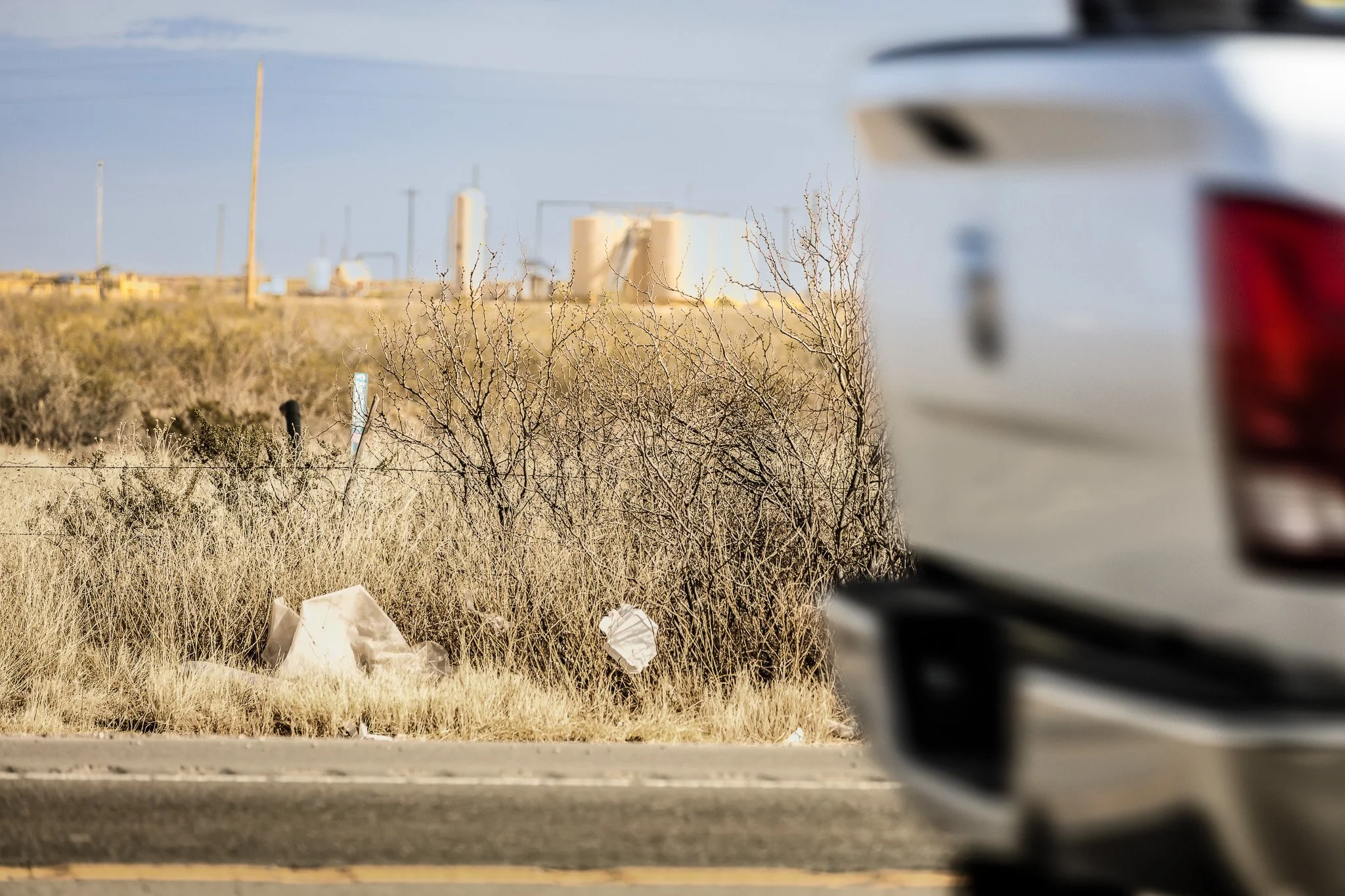
From the highway, the oilfield can almost pass for orderly. Tanks lined up like church deacons in their Sunday khaki, pipes tucked in place, a few ladders climbing toward nothing, and all of it sitting under a big blue sky that looks innocent enough to fool a banker, a county commissioner, and half the people watching cable news with the sound turned up too loud.
There is a strange calm to it from here. Dry grass. Dust hanging low. A little industrial haze. Nothing screaming. Nothing bleeding. Just another working yard out in the flat country where men with hard hats and bad backs keep the lights on for people who have strong opinions about energy but have never stood downwind of the machine that makes it.
The Road of Powdered Money
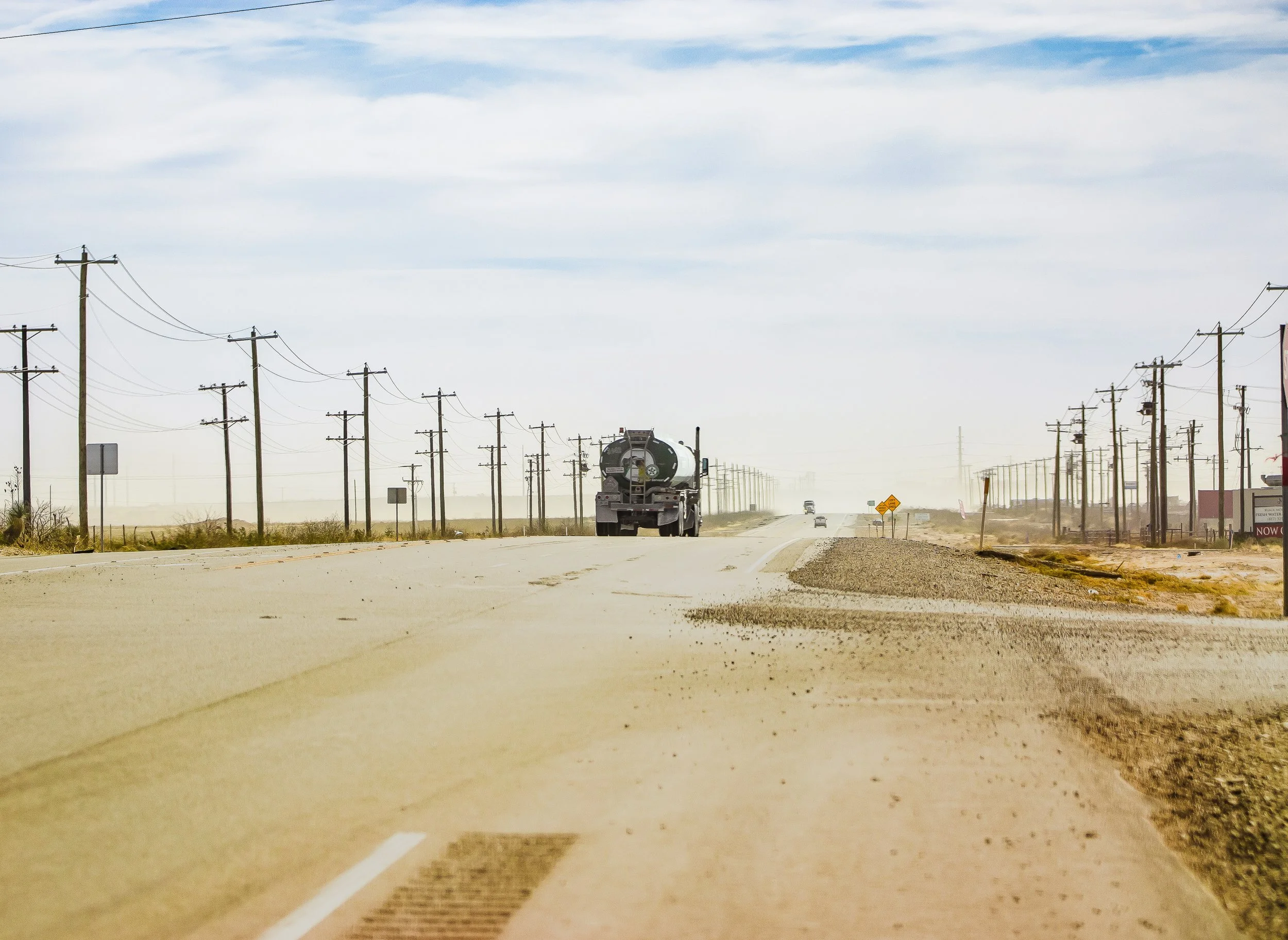
This is what progress looks like when it gets thirsty. A tanker moving through a white curtain of dust, power lines marching off like tired soldiers, the whole road cooked pale by sun and traffic and the constant grinding of commerce. Most people will never come out here. They will see oil as a price on a gas station sign, a campaign slogan, a villain in a documentary, or a miracle in a quarterly earnings report. But out here it is physical. It has weight. It has smell. It gets in your teeth. Every truck that passes throws another little piece of the place into the air, and everybody breathes it, because that is how the arrangement works. The county gets revenue, the companies get product, the drivers get paid, and the land gets treated like an old mule that nobody plans to retire.
The Fog of Useful Damage
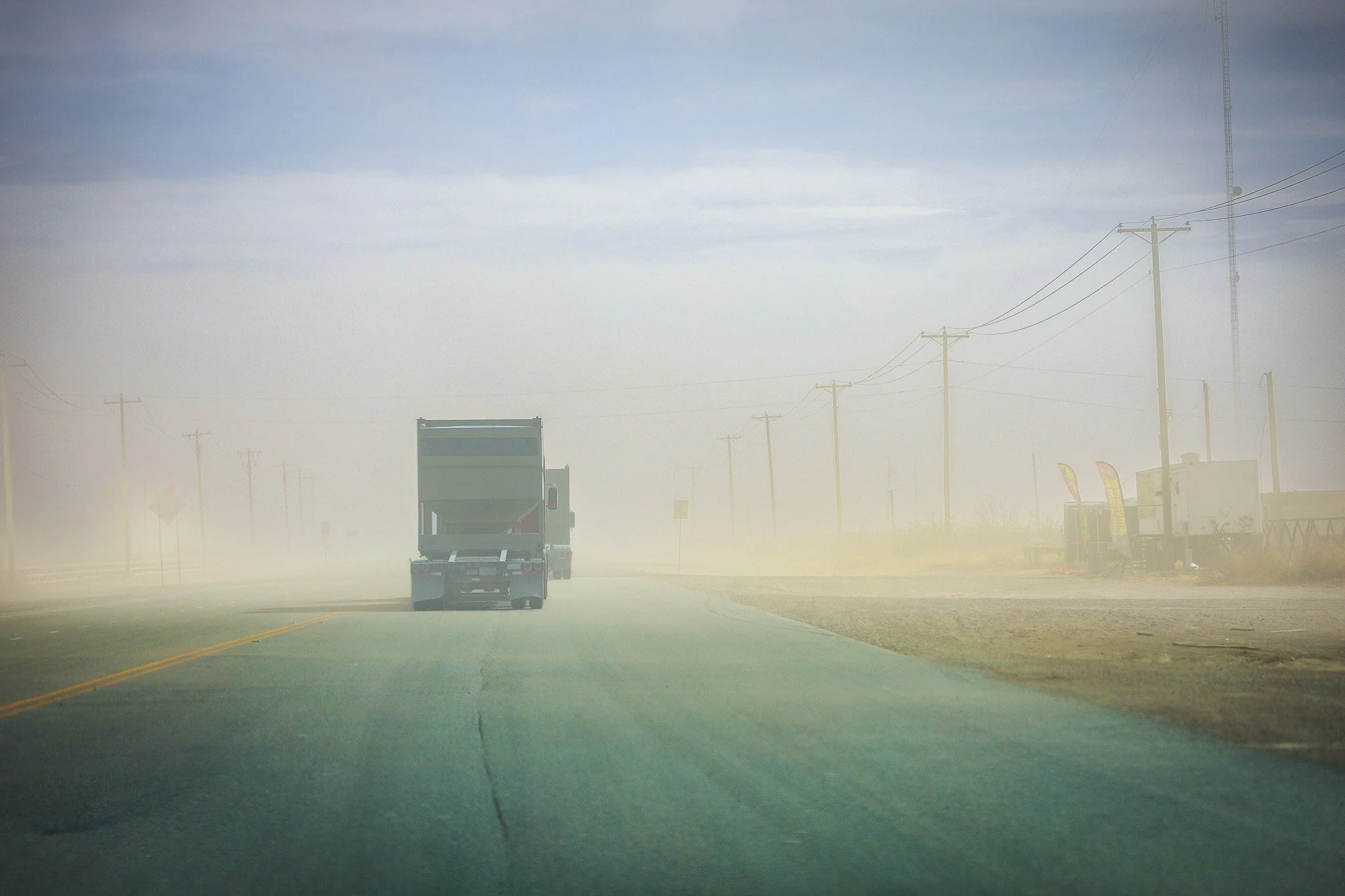
There are days when the oilfield does not even bother pretending. The dust comes up thick enough to make the horizon disappear, and the trucks roll through it like ghosts hauling invoices. This is where the public relations boys lose the plot. You can polish the website, film the safety video, put a smiling family in front of a sunset, and call the whole operation “responsible development” until your tongue falls out and crawls under the desk.
But a mess is still a mess. A pig with lipstick is still a pig, and this pig has been rooting around in the county budget, the school board, the hospital district, the sheriff’s payroll, and every road maintenance account from here to the next dry creek bed.
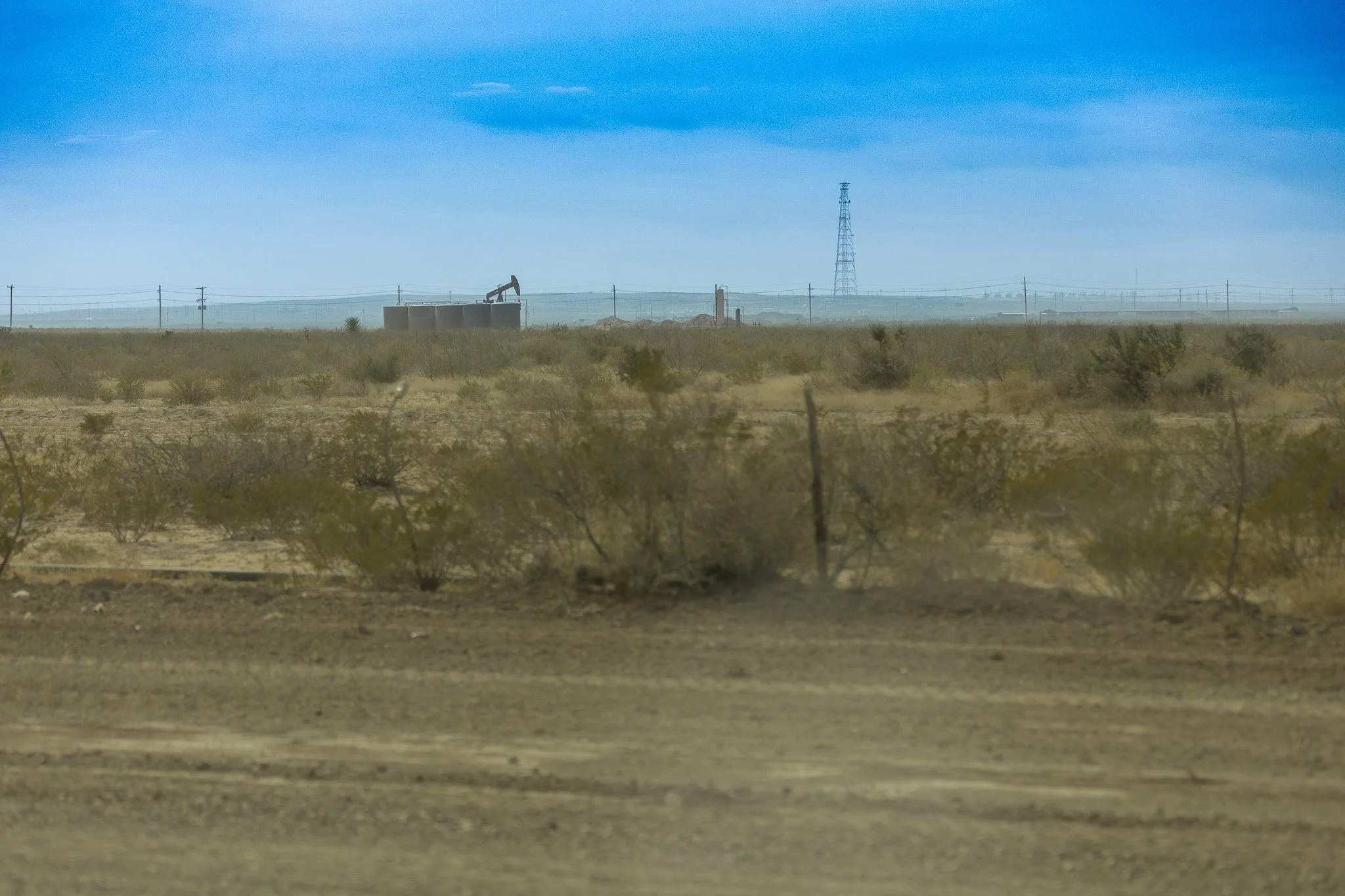
The Pumpjack in the Distance
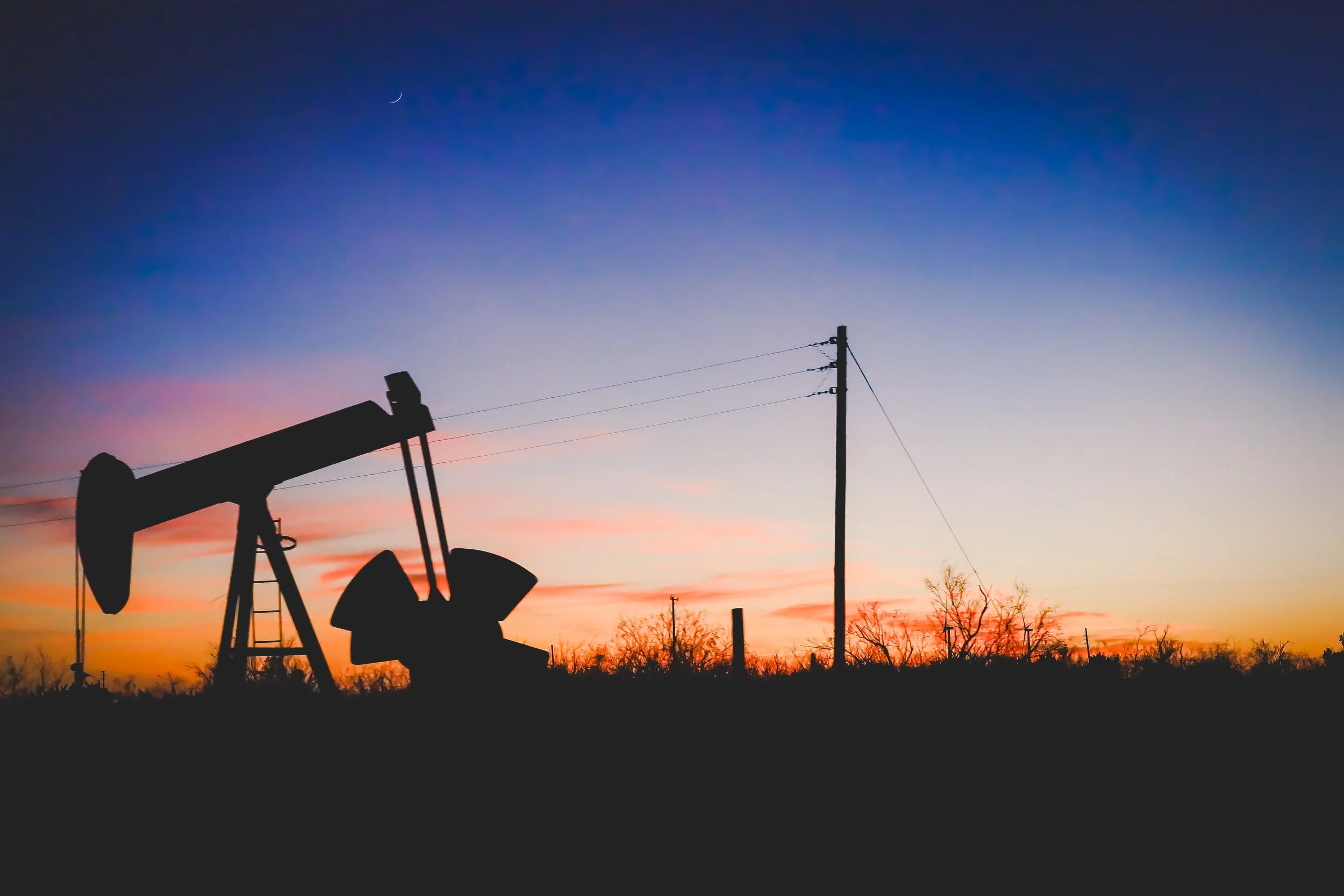
Look close and you can see the little steel animal working out there, nodding its head like it knows something we refuse to admit. The pumpjack is never dramatic. It does not need to be. It just bows and rises, bows and rises, dragging money out of the ground one mechanical prayer at a time. This is the part nobody wants to say cleanly: a lot of places survive on this. Not thrive in some glossy Chamber of Commerce fantasy, but survive. Schools get funded. Counties collect tax dollars. Unfunded mandates get patched with petroleum money and duct tape. Social programs that politicians praise in public and underfund in private get carried, at least in part, by the same ugly machinery those politicians condemn when the cameras are rolling. That is not hypocrisy exactly. It is worse. It is dependency dressed up as policy.
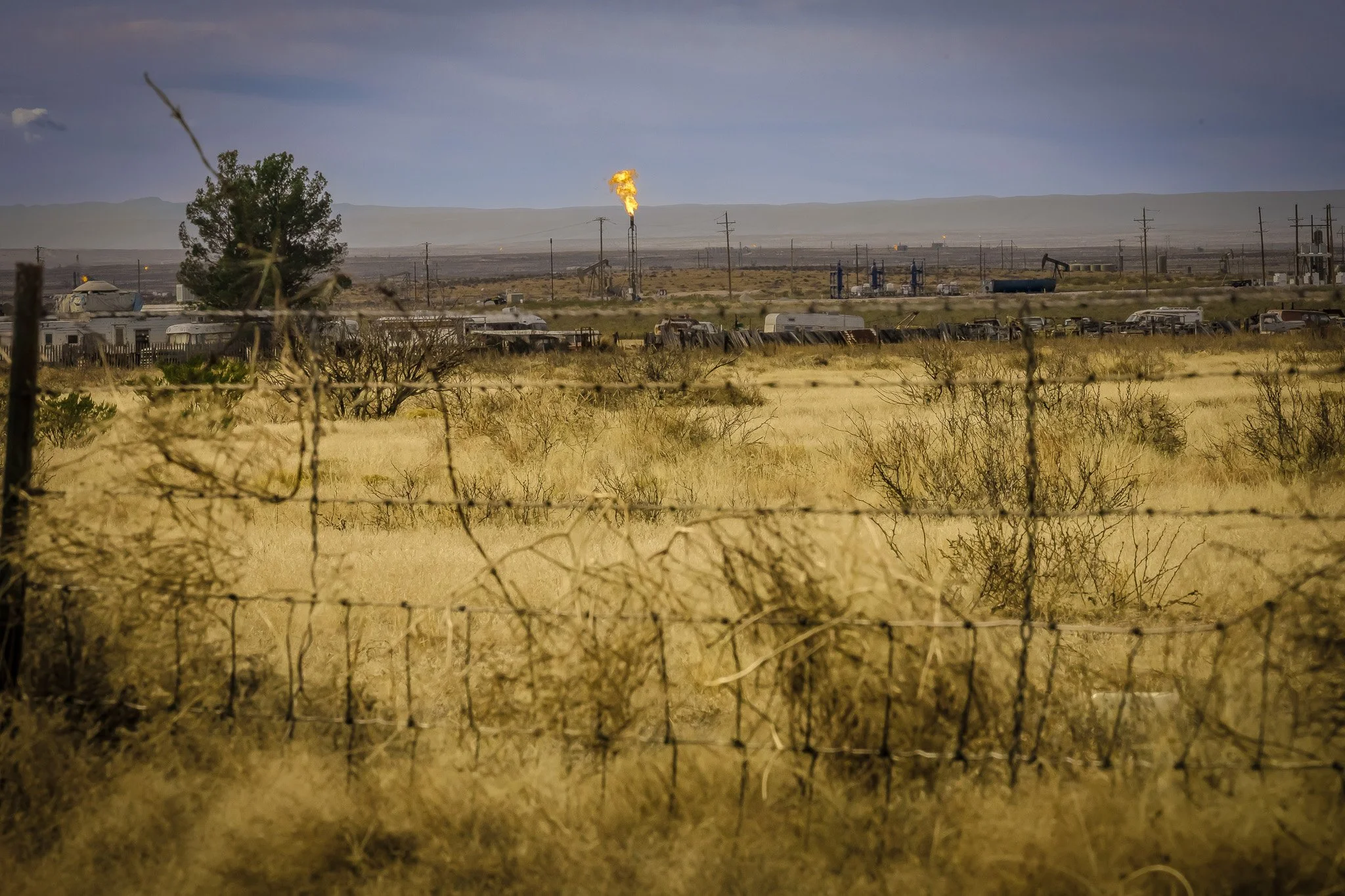
The Flame on the Horizon
There is something almost biblical about a flare burning over dry grass. A little orange tongue licking the sky, as if the earth itself had developed a fever and nobody could find the thermometer. You can call it waste, and you would not be wrong. You can call it necessary, and sometimes the engineers will tell you that you are not wrong either.
That is the filthy trick of this whole business. Everybody gets a piece of the truth and then pretends they own the whole damn cow. The environmental crowd sees ruin. The industry sees production. The county sees taxable value. The worker sees a paycheck. The parent sees school funding. The land sees all of us coming and probably wishes it had hired a lawyer.
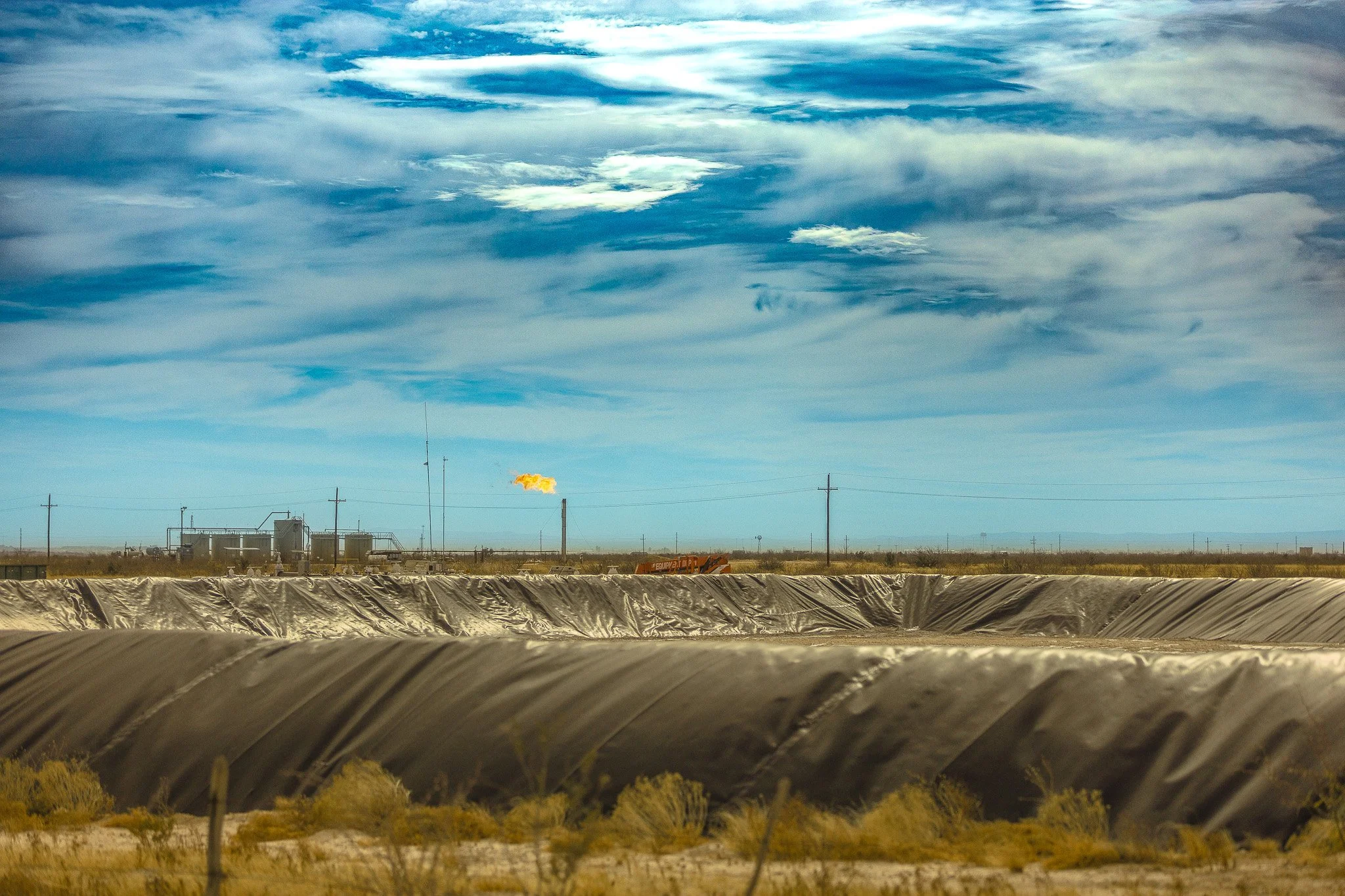
The Lined Pit and the Big Sky Lie
Here is the kind of picture that ought to make a person stop talking in slogans. A lined pit, a flare in the background, a sky big enough to make sin look small. That is one of the great lies of open country: it gives every ugly thing room to spread out and look less guilty. Put the same pit beside a subdivision playground and half the state legislature would faint into their catered lunch. But out here, with the horizon stretched wide and the clouds rolling like a painted ceiling, the whole thing becomes easier to accept. Not clean. Not pretty. Just easier. Distance is the cheapest form of moral anesthesia ever invented.
The Tanker in Town
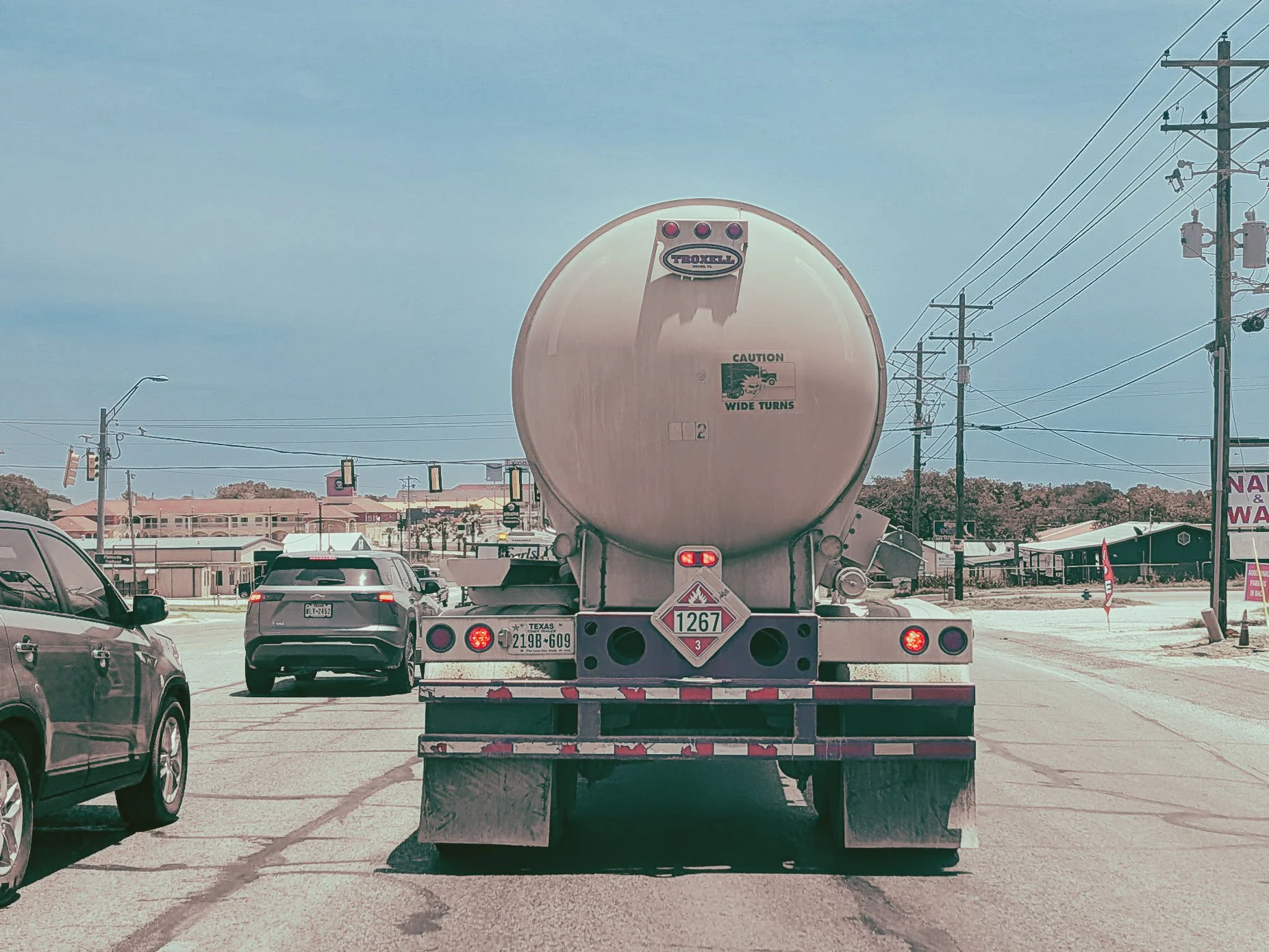
And then there it is, no longer out in the dust but right in traffic with the rest of civilization, wearing its hazard placard like a confession. The oilfield does not stay in the oilfield. It comes to town. It sits at the red light next to the grocery getter and the church van. It rolls past strip malls, schools, clinics, coffee shops, campaign signs, and all the little places where respectable people pretend the dirty work happens somewhere else. That is the joke, and it is not a clean one. We want the benefits without the sight of the bill. We want funded schools, paved roads, police radios that work, football lights on Friday night, and tax money for every new mandate some distant genius dreams up in an air-conditioned office. But we also want to believe the machine can be made spotless if we just hire enough consultants and invent enough phrases.
The truth is meaner than that. This thing is dirty as careless. It is useful as hell. It is overused, over-defended, over-demonized, and under-examined by nearly everybody with a microphone. The answer is not worship, and it is not fantasy. The answer is balance, which in modern politics is treated like a dead language spoken only by cowards and extinct philosophers.
We need energy. We need accountability. We need jobs. We need clean water. We need schools funded without pretending the revenue fell out of heaven in a basket with a bow on it. We need to stop letting industry write its own report card, and we need to stop letting people who have never driven these roads describe the whole thing like they saw it in a dream after brunch.
The oilfield is not just a place. It is a mirror, dusty and cracked, showing us exactly what we are: dependent, conflicted, practical, hypocritical, and still somehow convinced that the pig will become a princess if we keep buying better lipstick.