

From the South Texas Oilfields to the Architecture of Identity.

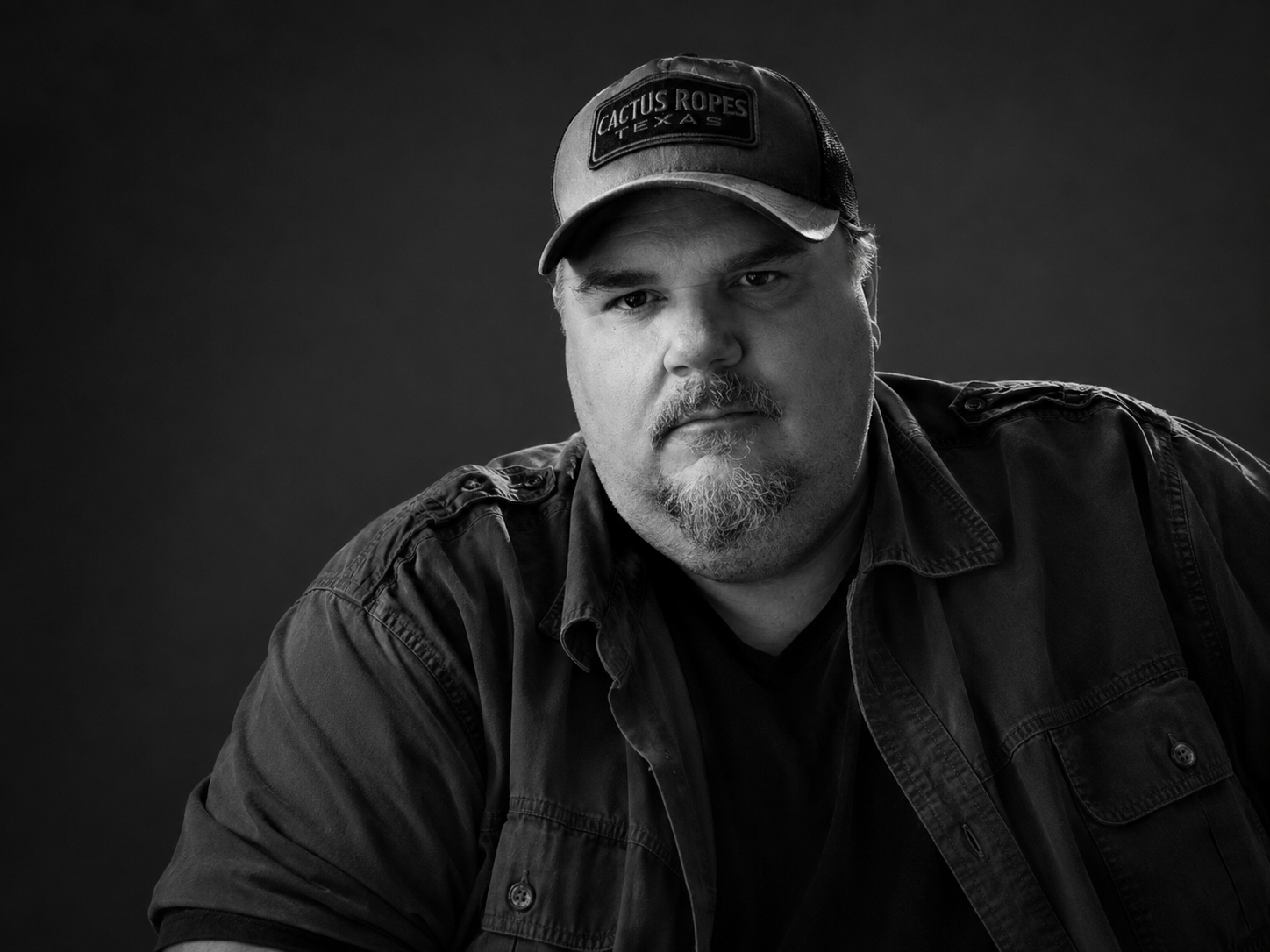
Black and white photo of a man with a beard and mustache wearing a cap that says "Cactus Ropes Texas" and a dark jacket, looking directly at the camera against a dark background.

The Intellectual Journey of Matt Pierce:

Storyteller, Researcher, and Guide

I have not always walked the path of a private client legacy consultant—or a "coach," as some conventional frameworks might label it. My story began at the old Bexar County Hospital in San Antonio, and my roots were planted just south of the city line in Floresville, Texas.

I was born into a long, proud lineage of oilmen, roughnecks, business leaders, and innovators. But like many who inherit a monumental family footprint, I felt an deeper internal friction. I wanted my own path, my own name, and my own distinct reason for existence. I respected my heritage, but I refused to simply copy and paste the chapters written before me. I wanted to forge a completely unique identity and leave an unrepeatable mark on the world.

A man with glasses and a beard posing outdoors at night with a full moon in the background.

Leaving the Frontier to Uncover the Global Narrative

Chasing Identity Through the Lens of a Photojournalist

To find myself, I had to leave the world I knew. I spent years traveling far beyond the borders of South Texas. I learned the mechanics of a camera and the rigorous discipline of journalism, crafting visual and written stories that audiences across the globe would see, read, and engage with.

In doing so, I became an artist. More importantly, I became my own person—anchored by my own hopes, dreams, intellectual goals, and vision for the future.

Yet, this journey made me a direct product of a quiet regional crisis: the Texas brain drain. In South Texas, true social capital and intellectual expansion can be remarkably difficult to cultivate without leaving. By pursuing an advanced education and building a competitive global career, I became someone who looked at his homeland from a distance, assuming I would never truly return.

A middle-aged man with short, curly gray hair, a goatee, and mustache, wearing a dark-green shirt with rolled-up sleeves, sitting against a textured gray wall, with arms crossed.

The Directive: Returning to a Changing Landscape

When the Relics of the Past Demand a New Way Forward

Everything changed the day I crossed paths with a mentor—a legendary Apollo commander and one of the fewer than a dozen humans to ever walk on the surface of the moon. He was also the commander of the very first space shuttle flight. He altered my entire trajectory. His mandate to me was clear, disruptive, and delivered with the absolute precision of a test pilot: Go back home. Participate in your culture. Inspire others by teaching them the exact lessons you had to leave the state to learn. Help them live their own lives completely on their own terms.

So, I came home to South Texas.

What I found was a region caught between eras. My hometown of Floresville, like many hubs surrounding San Antonio, exists as a relic of what used to be. While everything feels exactly the same, nothing is the same. A few of the faces have aged or shifted, none of the geographic places have moved, and the cultural narrative is the exact same one you have heard repeated for generations.

But my education and global exposure taught me something vital: true individualism is not about earning a certification, mastering a basic corporate skill, or becoming a useful, compliant worker inside someone else's system. It is certainly not about being a follower wrapped in a leader’s clothes.

Real individualism is found in the way we execute our lives. It is found in how we explore our internal boundaries, how we honor our past without being enslaved by it, and how we extract hard-won wisdom from our failures to build something monumental.

Where High-Performance Meets Personal Anthropology

Deconstructing the Architecture of Your Next Frontier

A large, detailed photo of the moon on the right side. On the left side, there are several text bubbles with phrases about personal growth, such as 'Personal Anthropology,' 'The Narrative of Our Legacy,' 'Adapting Through Change,' 'The Discovery of New Talents,' and a central phrase, 'At the Center Our Sense of Being,' with supporting descriptions.

When you examine "The Square of Transition", you see a model that rejects standard self-help clichés. It places Our Sense of Being at the absolute epicenter—demanding that a leader remain aware, present, and ruthlessly grounded.

From that center, we deploy four distinct pillars of strategic self-discovery:

  • Personal Anthropology: We map your unique human history, identifying the behavioral patterns and driving purposes that got you here.

  • Adapting Through Change: We acknowledge that structural disruption is inevitable. Together, we treat adaptation as a conscious choice so that massive personal growth is the automatic result.

  • The Narrative of Our Legacy: We meticulously honor where you come from, explicitly define what you will carry forward into this chapter, and artistically shape the empire or values you will leave behind.

  • The Discovery of New Talents: We systematically tap into what is next on your horizon—forcing you to experiment, explore hidden skillsets, and expand your maximum human potential.

A man with glasses and a goatee stands outdoors during a thunderstorm at night, with lightning illuminating the dark sky in the background.

This Is the Work.

High-Status Advisory for Discerning Texans

This framework is not therapy. It is a sophisticated personal development space explicitly engineered for those who understand that while change happens to everyone, adapting with absolute conviction is the ultimate challenge.

I was taught by elite minds across the world and right here at home that these core principles are what truly drive us, evolve us, and transition us into legendary individuals. If you are ready to stop copy-pasting your existence and intentionally author your ultimate frontier, let us begin the dialogue.