
A San Antonio Journalist on Media, Middle America, and the Stories Outsiders Keep Getting Wrong
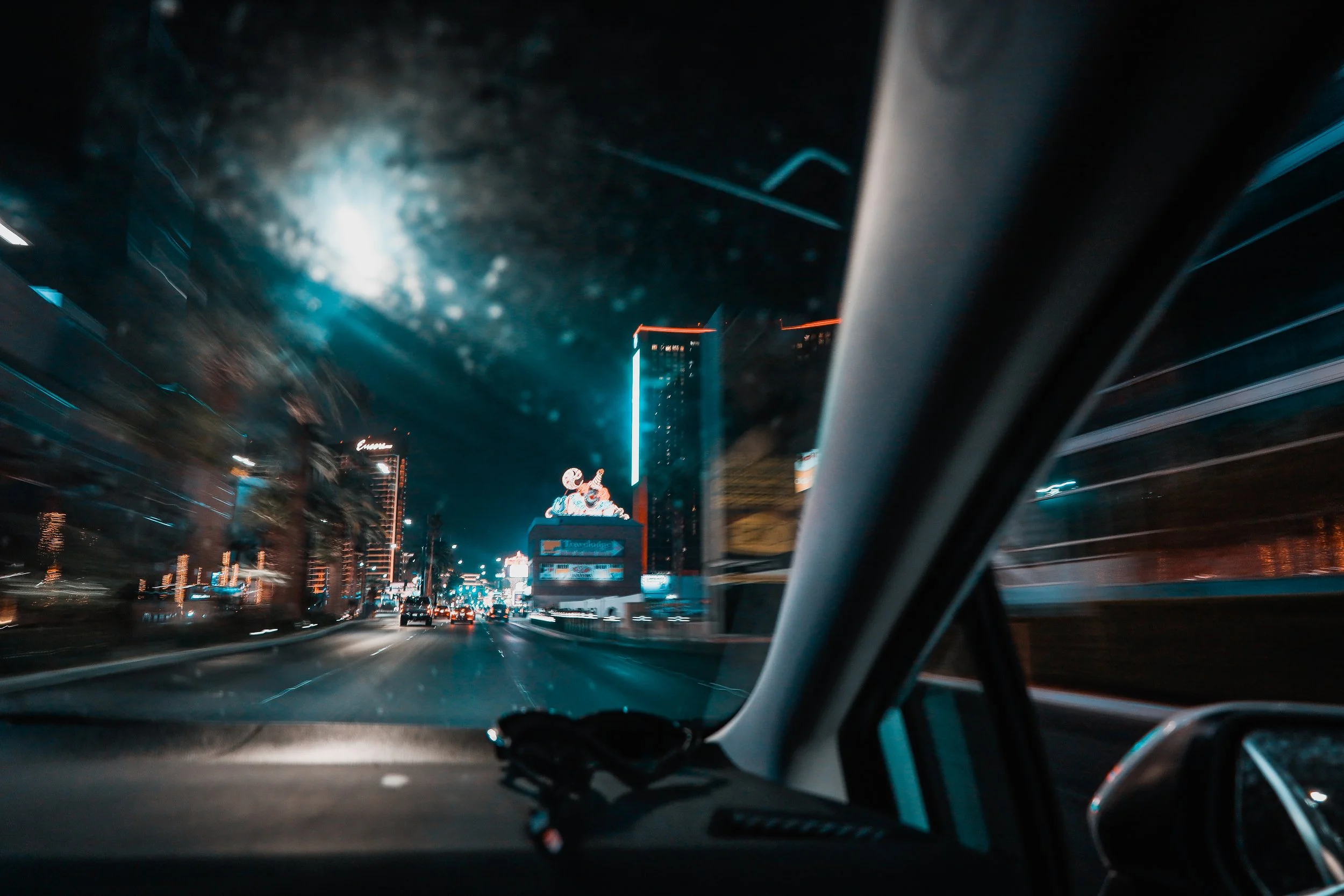
Las Vegas has more in common with San Antonio that the two really think. The only difference is that one is more free than the other. (J. Matthew Pierce)
There is a strange thing that happens when people come looking for “real America.”
They usually arrive with a camera, a thesis, and just enough curiosity to be dangerous.
Sometimes they come from the national media. Sometimes they come from YouTube. Sometimes they come from a podcast studio where the lighting is perfect, the coffee is expensive, and the word “authentic” gets thrown around like loose change at a truck stop.
They come looking for the people they believe have been ignored. Hell, I wrote a book about it.
Working people. Rural people. Small-town people. Texans. Southerners. People who live outside the polished districts where the media class feels comfortable. People who work with their hands, bury their dead quietly, vote their conscience, raise families, lose jobs, rebuild lives, sit in traffic, pray when nobody is watching, and keep going because that is what people have always done.
Then the outsiders package them.
Not always cruelly. That is the tricky part. Sometimes they do it with what looks like compassion. Sometimes they do it with soft piano music, handheld footage, and a voiceover about dignity. But too often, the result is the same.
Middle America becomes a museum exhibit.
A packaged freak show with better lighting.
And those of us who actually live out here can feel it.
The Problem With Mainstream Media Is Not Just Bias
People love to say the problem with mainstream media is bias.
That is true, but it is also too easy.
Bias is only part of the problem. The deeper issue is distance.
A lot of national media does not understand the country because it does not spend enough time inside the country. It flies over places, then explains them. It parachutes into towns after something terrible happens, then leaves before the people have finished sweeping the glass off the sidewalk.
Mainstream media wants the talking points. It wants conflict. It wants the clean narrative.
This side versus that side.
Red versus blue.
Urban versus rural.
Educated versus uneducated.
Progress versus tradition.
Nice and neat. Easy to sell. Easy to argue about on television.
But real life is not neat.
San Antonio is not neat. Texas is not neat. America is not neat.
Most people are not walking political categories. They are contradictions with bills to pay. They are generous and angry. Hopeful and exhausted. Proud and embarrassed. Faithful and skeptical. They know more than outsiders think they know, and they usually understand their own lives better than any columnist, pundit, influencer, or documentary crew passing through for content.
That is where journalism is supposed to matter.
Not journalism as performance.
Not journalism as branding.
Not journalism as a career ladder.
Journalism as witnessing.
Why Being a San Antonio-Based Journalist Matters
I am based in San Antonio, and that matters.
Not because San Antonio is some magical key to understanding America, but because it sits at a crossroads that forces you to pay attention.
This city is military, Mexican American, working class, old Texas, new Texas, Catholic, Protestant, secular, rich, poor, polished, broken, expanding, remembering, and forgetting all at once. It is a city of highways, hospitals, construction sites, old neighborhoods, family restaurants, political tension, military families, teachers, nurses, immigrants, veterans, hustlers, artists, and people trying to get through the week.
That kind of place teaches you something.
It teaches you not to trust easy explanations.
When you spend years as a journalist out in the real world — talking to people, photographing people, listening to people, sitting in rooms where the official statement does not match the look in someone’s eyes — you start developing a different kind of radar.
You learn what people say when they are performing.
You learn what people say when they are afraid.
You learn what people avoid saying altogether.
And eventually, you learn that the story is usually not where the press release says it is.
That experience is one of the reasons I started shaping my larger writing project, American Splinters, around the fractured, complicated, half-buried pieces of American life that do not fit cleanly into the national script.
Not the America sold in campaign ads.
Not the America flattened by cable news.
Not the America turned into content by people passing through.
The real one.
The one with dents in it.
YouTube Did Not Fix the Problem
For a while, a lot of people believed YouTube and independent media would fix what mainstream media had broken.
In some ways, they did help.
They gave more people a voice. They allowed independent creators to bypass old gatekeepers. They made room for stories that legacy outlets ignored. That part is good. Very good.
But let’s not kid ourselves.
YouTube created a new problem.
Now we have a generation of creators who travel into Middle America looking for “real people” and “forgotten towns” and “the truth about America.” They walk through poor neighborhoods. They interview people in diners. They film abandoned buildings. They talk about addiction, poverty, loneliness, religion, and decline.
Sometimes they do honest work.
Other times, they turn people’s lives into atmosphere.
They may not mean to exploit anyone. Some of them probably believe they are helping. But there is a fine line between telling someone’s story and using someone’s struggle as emotional scenery.
And too many creators cross that line while smiling.
They treat ordinary Americans like characters in a theme park called “Authenticity.” They marvel at poverty. They romanticize decay. They praise people’s resilience while quietly profiting from their pain.
That is not storytelling.
That is tourism with a microphone.
Real America Does Not Need Translators
One of the most insulting assumptions in modern media is that Middle America needs to be translated for everyone else.
As if people in small towns, working-class neighborhoods, border cities, oil towns, farm communities, and forgotten counties are somehow mysterious creatures who require interpretation.
They do not.
They need to be listened to.
There is a difference.
Listening requires humility. Translation often requires ego.
The best journalism does not walk into a place and say, “Let me explain these people to the world.”
It says, “Let me stay long enough to understand what the world keeps missing.”
That is the difference between journalism and content.
Journalism is patient.
Content is hungry.
Journalism asks what is true.
Content asks what will perform.
Journalism respects silence.
Content fills every silence with a voiceover.
And that is why lived experience matters.
The Asset Is Being Close to the Ground
I do not believe being independent automatically makes someone better.
There are lazy independents just like there are lazy professionals. There are dishonest YouTubers just like there are dishonest cable news hosts. A bad storyteller is still a bad storyteller, even if he owns a drone and says “mainstream media” every four minutes.
But being close to the ground gives a person an advantage.
It gives you texture.
You notice the small things. The way a neighborhood changes when rent goes up. The way a family talks around a subject instead of naming it. The way a city celebrates growth while quietly pushing certain people farther out. The way politics sounds different at a kitchen table than it does on television.
That is the America I am interested in.
Not the cartoon version.
Not the campaign version.
Not the influencer version.
The America that still exists between the official stories.
That is also the America I keep returning to in my work as a journalist, photographer, essayist, and in the larger world I am building around American Splinters — a project about memory, fracture, identity, place, and the pieces of this country we keep stepping over because they do not fit the preferred narrative.
The Story Is Not Dead. The Story Is Just Buried.
The old media institutions are not going away. The new creators are not going away either.
That means the fight now is not simply mainstream versus independent.
That is yesterday’s argument.
The real fight is between people who extract stories and people who honor them.
Between people who use communities as backdrops and people who understand that every place has its own language, history, pride, shame, humor, and grief.
Between people who want America to be simple and people willing to admit it never was.
That is where I want my work to live.
On the road.
In the city.
In the forgotten places.
In the uncomfortable conversations.
In the space between nostalgia and reality.
Because the truth is, this country is still full of stories. They are not gone. They are just buried under noise, politics, algorithms, branding, and the endless machinery of distraction.
Somebody still has to go looking.
Not as a tourist.
Not as a savior.
Not as another outsider trying to explain the locals.
But as someone willing to sit with the mess, listen carefully, and tell the truth without turning people into props.
That is the job.
Or at least, it used to be.
And maybe, if we are serious enough, stubborn enough, and honest enough, it can be again.