
The America We Lost, Seen Through a Dirty Windshield
A photo essay for the road, the old motels, the half-dead gas stations, and the kind of America that never asked you to download an app before it let you sit down.
The Lodge Chair
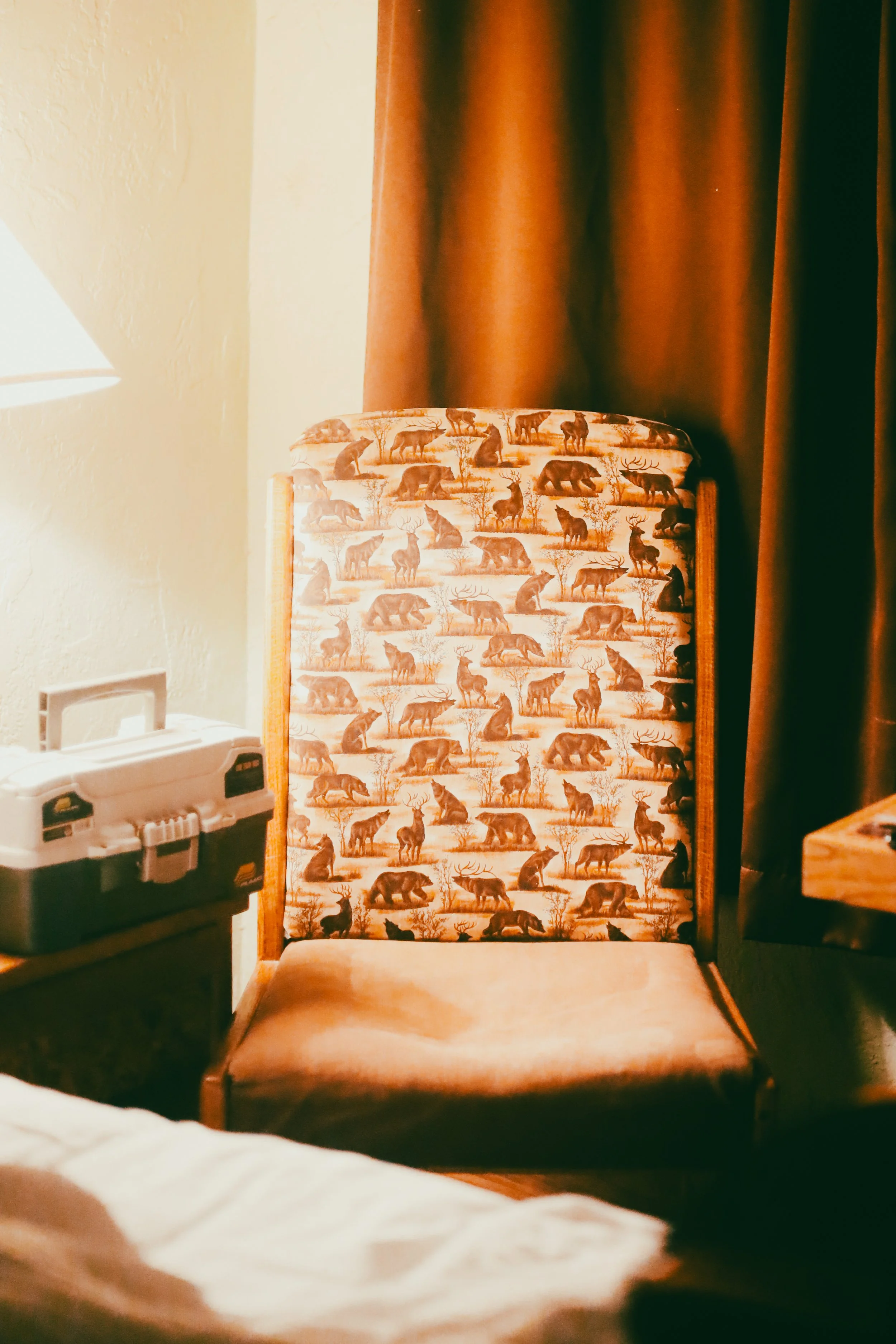
There is a kind of chair that no algorithm will ever understand. This one sits in the corner of a room that smells faintly of old pine, warm dust, cheap soap, and the last honest cigarette smoked before America decided every room needed a QR code and a corporate wellness policy. The fabric is covered in elk and bears and other noble beasts that still have the decency to look unemployed by the federal government. This was not luxury. Luxury is usually a scam with marble countertops and a resort fee hiding in the bushes. This was comfort. A chair, a curtain, a toolbox, a bed nearby, and a silence thick enough to make a man remember what he used to believe before the phone started barking orders at him every twelve seconds.
The Dodge Tailgate
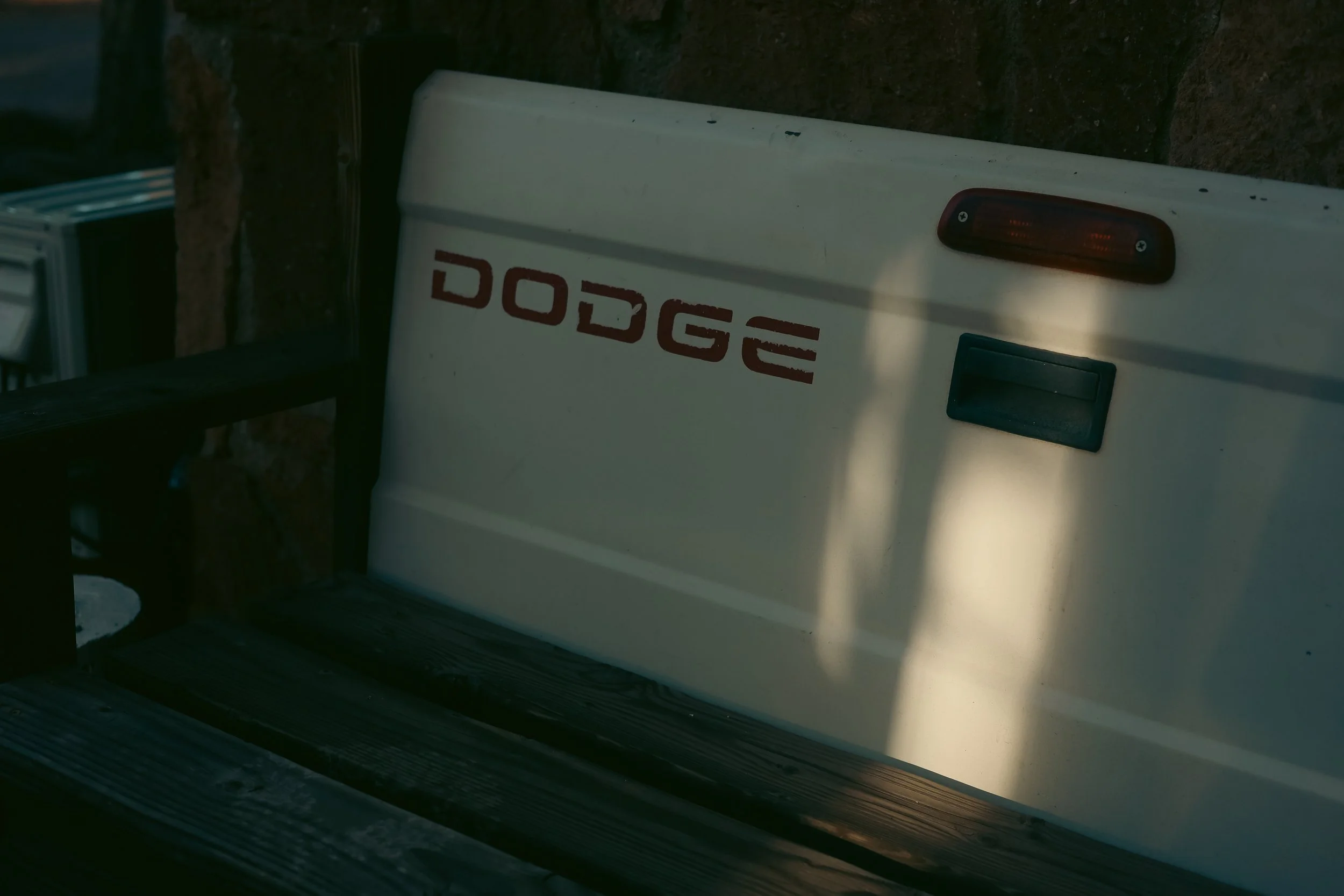
The old Dodge sits there like a retired sheriff who has seen too much and decided, wisely, to keep his mouth shut. No touchscreen. No subscription heated seats. No little computer tattling to a corporation about how hard you braked outside Tucumcari. Just steel, dirt, shadow, and the word “DODGE” fading slowly into the afternoon like a commandment from a dead republic. It is now turned into something different and useful. There was a time when American machines looked like they were built by men who knew what a busted knuckle felt like. Now everything looks designed by a committee of frightened interns in ergonomic chairs, each one terrified that a vehicle might have a soul and therefore become legally complicated.
The Bench Outside the Joint
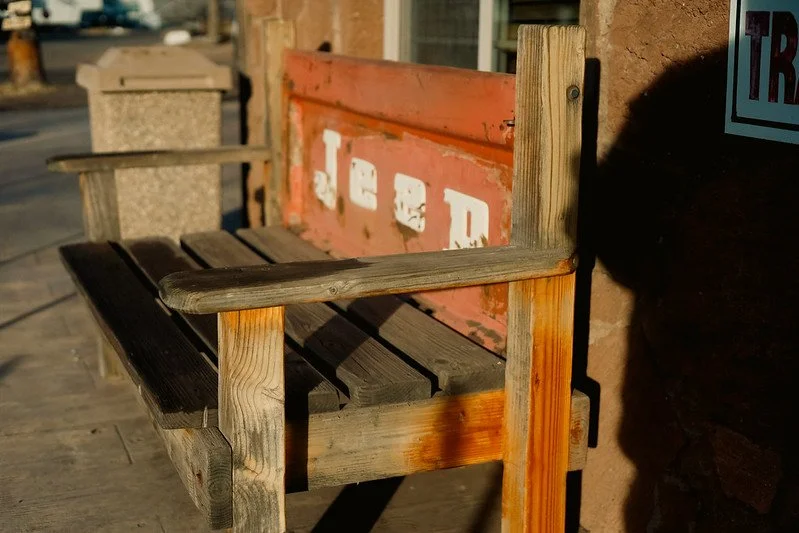
This bench has more character than half the people currently explaining America on television. It is sunburned, splintered, and nailed together with the sort of confidence only found in small towns and felony affidavits. Behind it, an old beer sign bleeds through the years, half-visible, half-forgotten, like the ghost of a Saturday night when gas was cheap and nobody had to pretend that a $19 hamburger was part of an “elevated dining experience.” This was the America of waiting. Waiting for a friend, waiting for a beer, waiting for the mechanic to call, waiting for the storm to pass. We have traded that for constant movement and somehow arrived nowhere, sweaty and overcharged, with a rewards account we never wanted.
The Doorway to Route 66
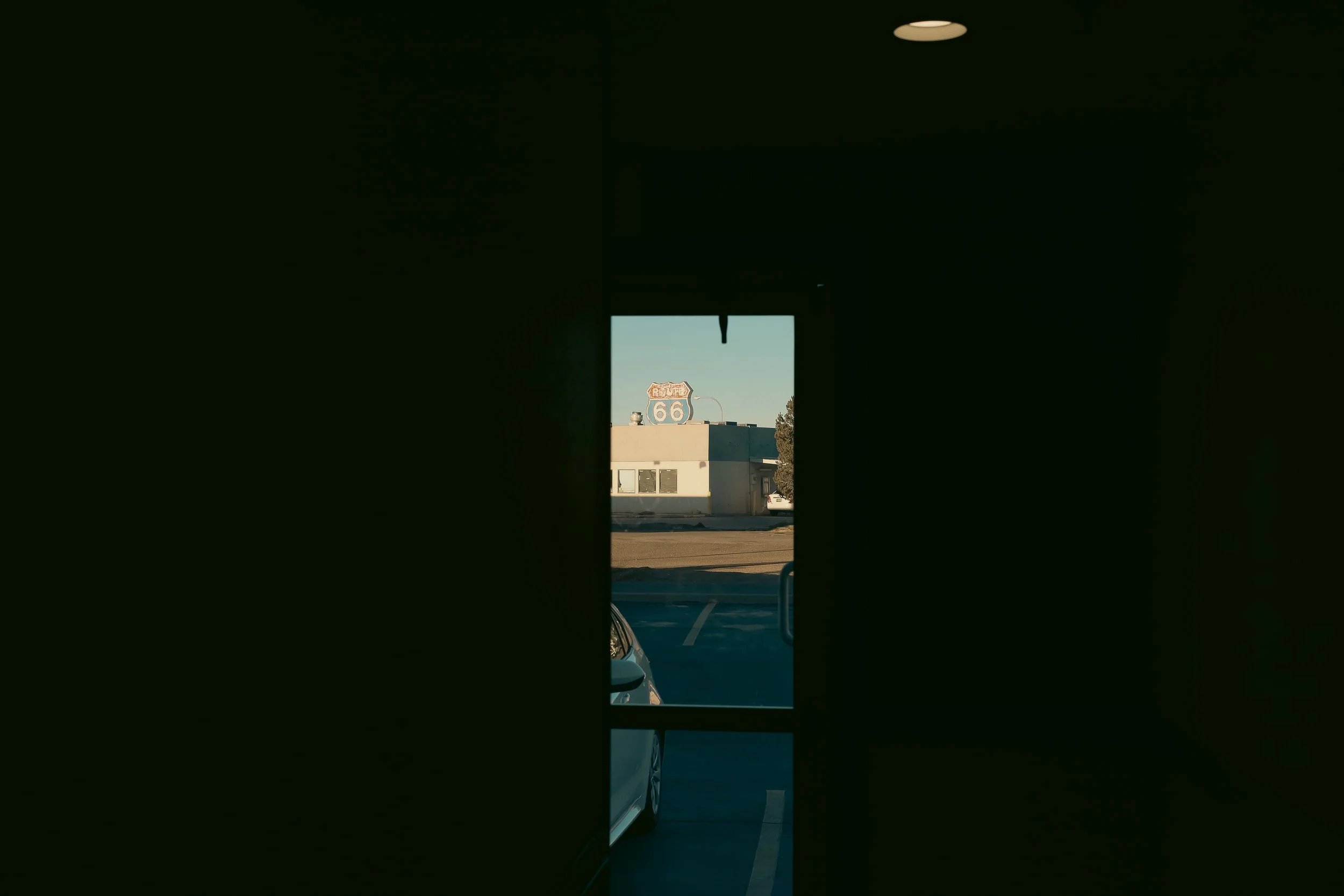
There it is through the dark doorway, Route 66, framed like a fever dream at the end of a hallway. The Mother Road reduced to a sign across the street, seen from inside some dim room where the carpet has absorbed forty years of weather and bad decisions. That is how memory works in the West. You do not see the whole thing. You catch it through a rectangle of shadow while standing in a place nobody remembers building. The old road is still out there, but it is surrounded now by plastic commerce and nostalgia merchants selling fake authenticity by the pound. The country did not vanish all at once. It got franchised, laminated, and sold back to us in distressed lettering.
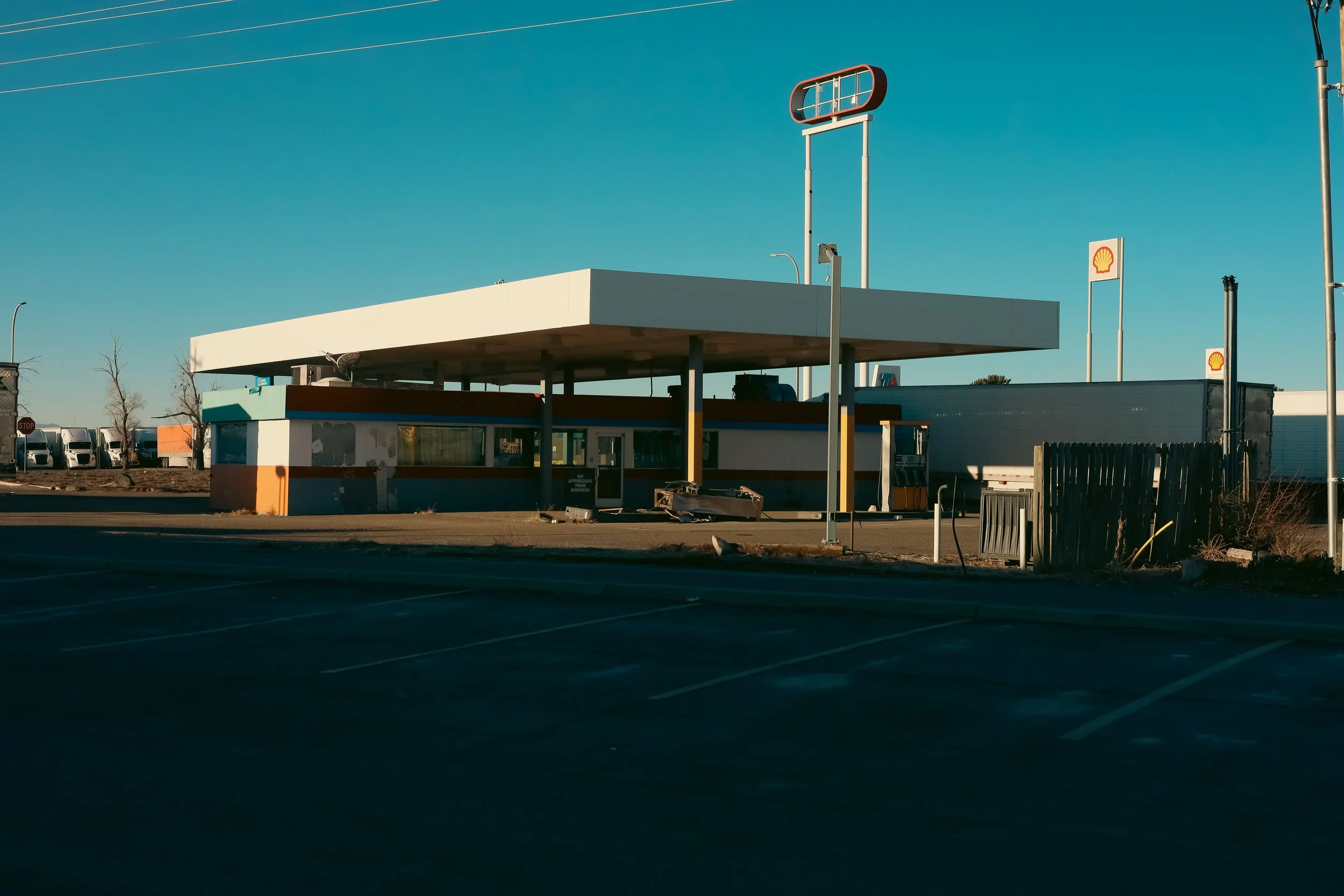
The Dead Gas Station
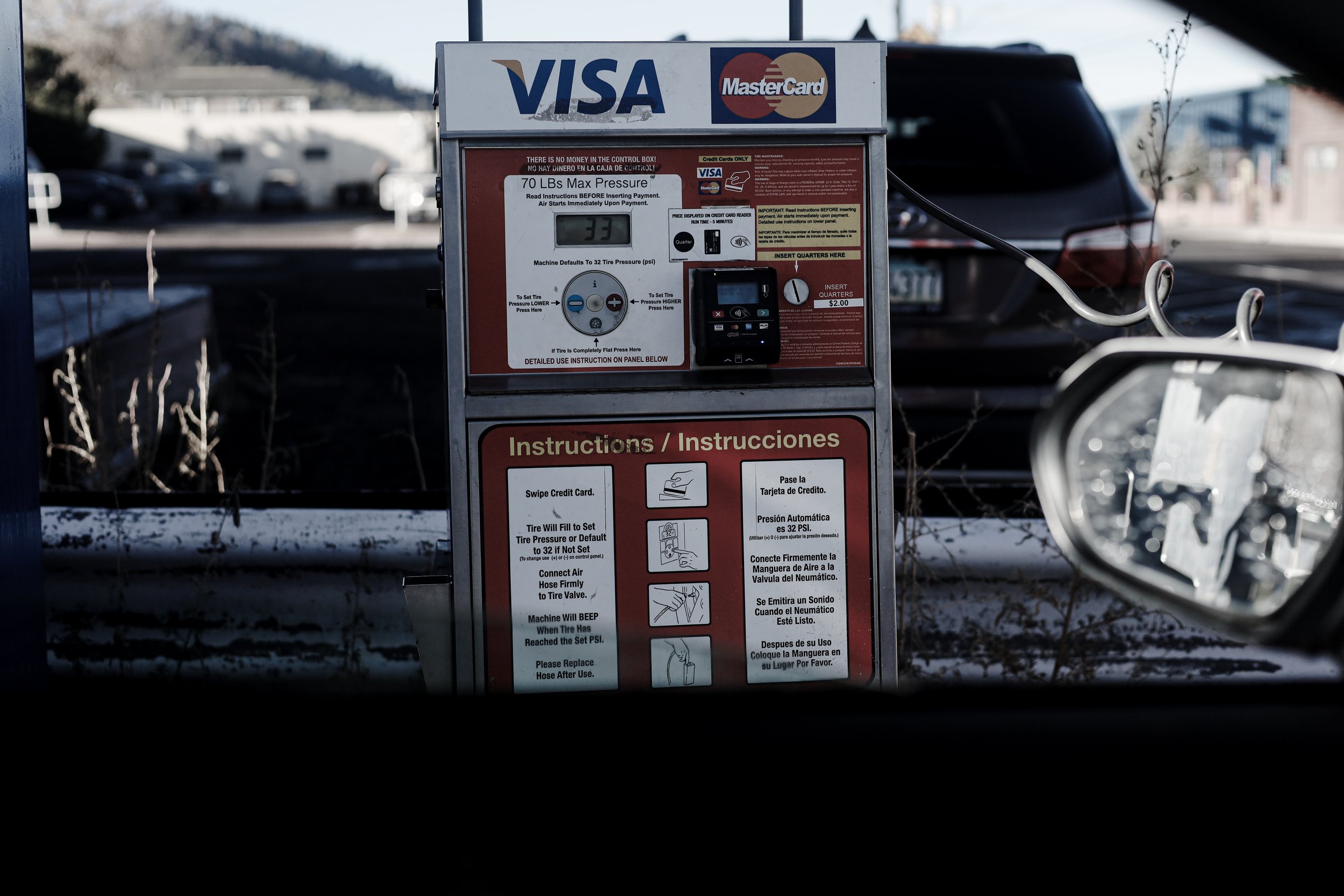
A dead gas station is a church for the kind of American who knows exactly how badly we have been hustled. Look at it. The canopy still stands. The pumps are gone or useless. The Shell signs hover in the distance like corporate buzzards circling a carcass they already picked clean. Once, places like this were little kingdoms of motion. Coffee in a scorched pot. A rack of maps. A bathroom key attached to a hubcap. A man behind the counter who could tell you whether the pass was open and whether the sheriff in the next county was a bastard. Now the new places want your phone number before they will sell you a bottle of water. Progress, they call it. That is one word for it. Armed robbery with better lighting is another.
The Truck Behind Glass
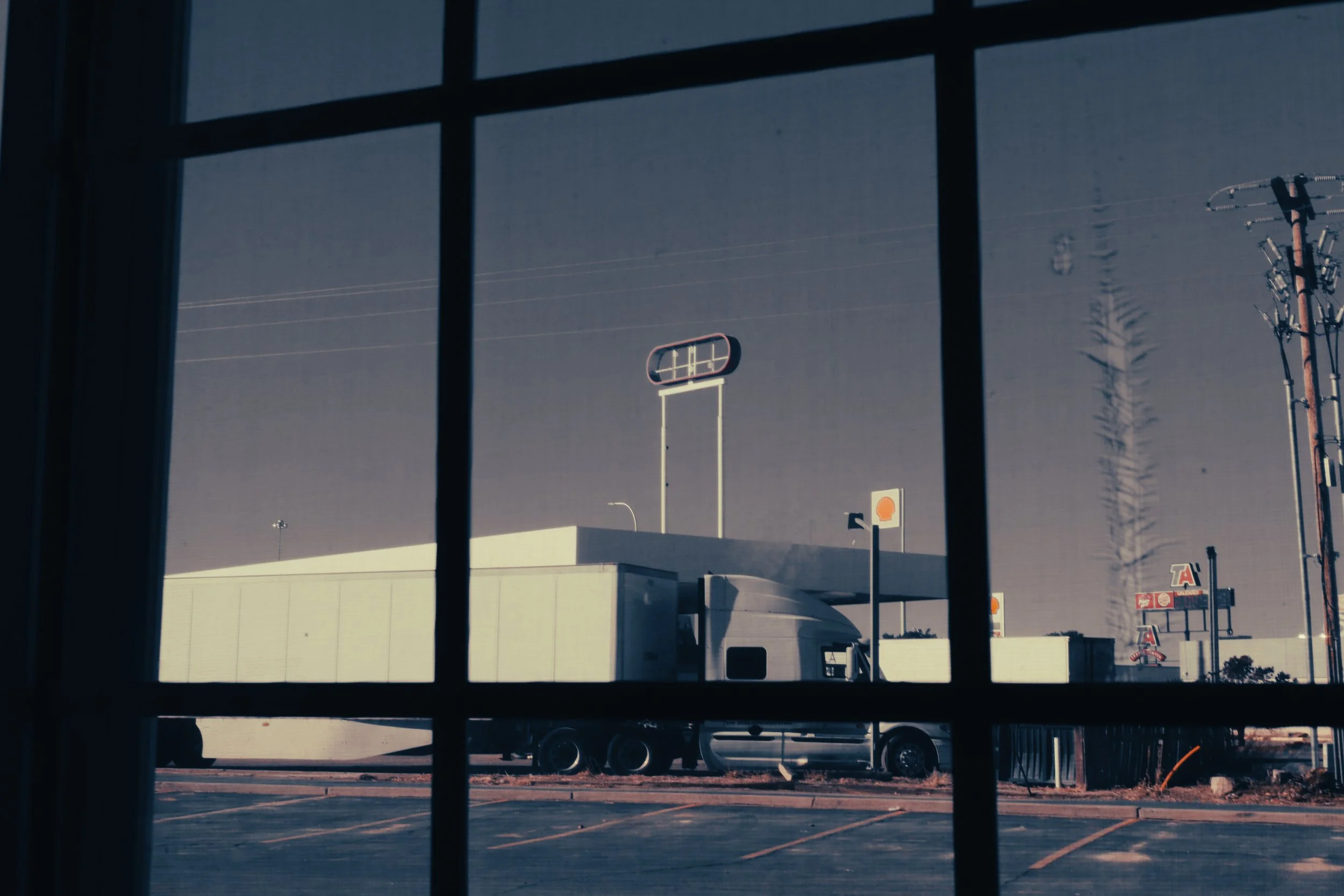
The semi rolls past behind the window, sliced into pieces by the frame, moving through the old American grid like a whale behind aquarium glass. This is the West as seen from a room where the air conditioner rattles like a dying witness and the morning sun does not forgive anybody. The truckers still move the country while the professional talkers sit in climate-controlled studios and explain the economy as if it were a board game. Out here, the economy is diesel, asphalt, bad coffee, and a man trying to make Albuquerque before the logbook ruins his day. The road does not care about theories. The road takes payment in time, tires, fuel, and lower back pain.
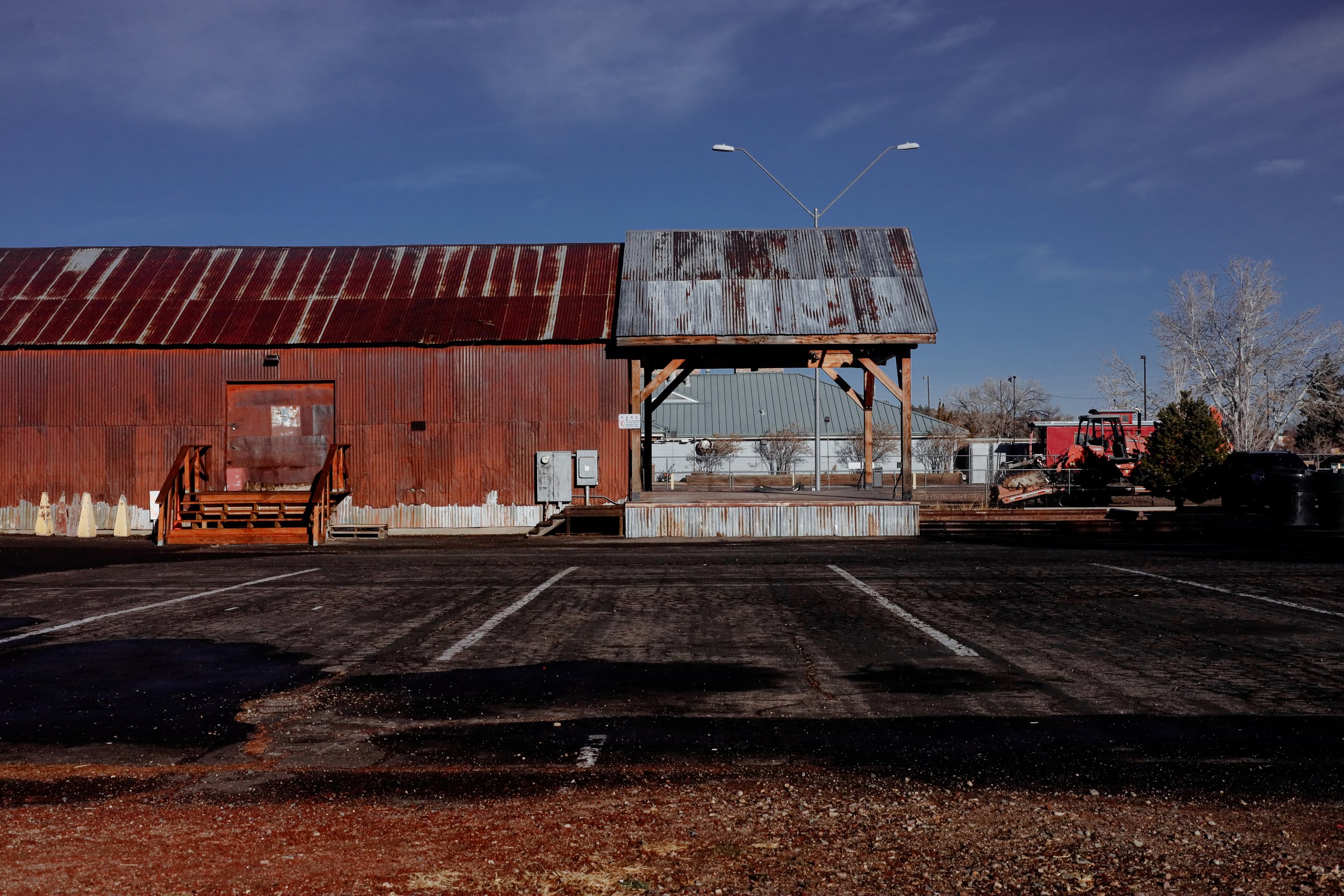
The Rusted Building and the Empty Lot
This is the end of the road, or at least the part where the road stops pretending. A rusted building, empty parking spaces, a strip of blue sky, and a silence big enough to swallow all the campaign slogans ever printed. It looks abandoned, but it is not dead. That is the trick. America is full of places like this, wounded but not finished, half-collapsed but still holding their shape in the sun. You can see opportunity here if your eyes have not been ruined by glossy brochures and venture capital hallucinations. Somebody could reopen this place. Somebody could build something useful. A shop. A hall. A diner. A repair yard. A place for locals instead of another sterile monument to people passing through with too much money and no manners.
A Cautious Hope, With Teeth
The America we lost was never perfect. Let us not get drunk on our own nostalgia and start claiming every old motel was paradise and every roadside diner served freedom with the meatloaf. A lot of it was rough, broke, crooked, lonely, and mean as a snake in a feed bucket. But it was real. It had texture. It had faces. It had people who knew how to fix things, people who knew how to leave you alone, and places that did not treat every weary traveler like a data point waiting to be milked.
There is still a chance to save some of it. Not by turning the West into a museum, and not by letting developers dress up concrete boxes in fake “heritage” paint and call it preservation. The opportunity is simpler and harder than that. Buy the old places. Repair them without sterilizing them. Keep the signs. Keep the benches. Keep the weird chairs with the elk on them. Let a motel be a motel. Let a gas station sell gas, coffee, and bad advice. Let travelers rest without being harvested by some grinning dopamine cartel in a fleece vest.
But here is the warning, and it is hard as Hell.
If we let every old road become a marketing funnel, every small town become a theme park, every lodge become a luxury “experience,” and every human transaction become another chance for some bloodless company to extract a fee, then we will not merely lose the America in these photographs. We will deserve to lose it. And when the last real place is gone, when the last honest neon sign is replaced by a branded lifestyle concept, do not ask where the country went.
You sold it.
One convenience at a time.