
South Texas BBQ, Instagram Culture, and the Magnolia Dream in Floresville
A Sunday drive through Floresville turns into a bigger look at South Texas BBQ, small-town economics, Instagram aesthetics, shrinking portions, rising beef costs, and the Magnolia Dream haunting modern rural life. (Matt Piece)
There is a particular kind of Sunday drive in South Texas that does something strange to a man’s nervous system. You get in the truck with your wife, point it toward the old hometown, and before long you are not just driving through Floresville, you are driving through your own archaeological dig. Every street corner is a fossil. Every closed shop is a sermon. Every “coming soon” sign is either a resurrection story or another small-town fever dream waiting to be repossessed by the bank.
That is how I ended up back in Floresville on a Sunday, looking around at the place that raised me, wounded me, shaped me, and still somehow stands there in the heat like an old uncle who refuses to go to the doctor. I had been seeing talk about a new BBQ place, Nickle BBQ, sitting in the same spot where a bakery had gone under not too long ago. Same basic shell. Same small-town hope. Same dangerous gamble that a coat of paint, a glowing sign, a little farmhouse-industrial décor, and the smell of meat might be enough to summon prosperity out of the dust.
My wife and I stopped in.
Now let me be clear before the local Facebook militia starts oiling the trebuchets. This is not a hit piece. I am not here to stomp on somebody’s dream just because my potato salad came at me like it had been cured in a salt mine. People like this place. Some locals like it because they genuinely enjoy it. Some like it because Floresville does not exactly have a hundred options standing in line begging for your lunch money. Some BBQ writers will praise almost anything with a smoke ring and a decent logo because the modern food-writing economy is part journalism, part friendship bracelet, part soft extortion by way of Instagram engagement.
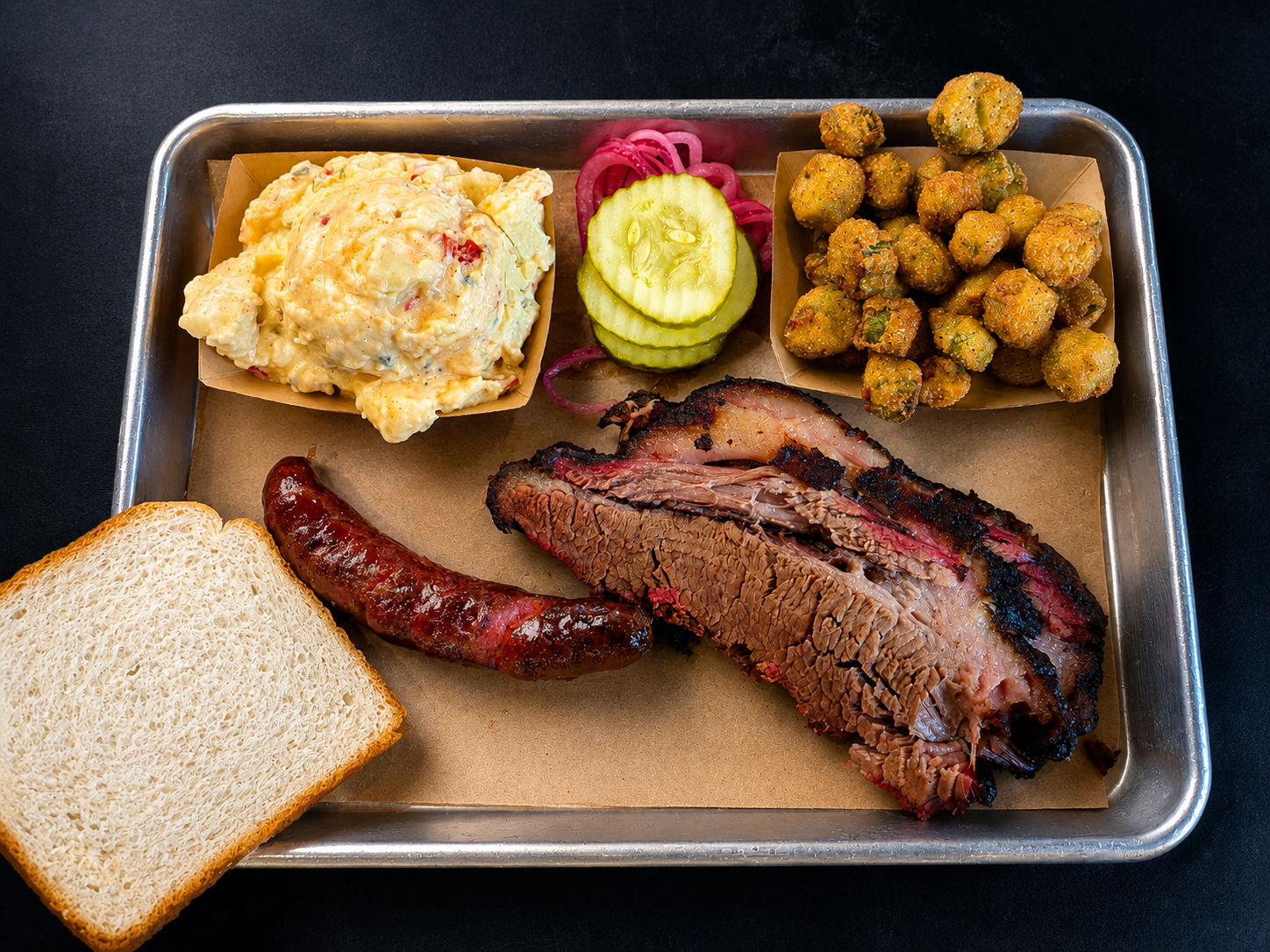
But my experience was what it was. The brisket was mediocre. The potato salad had far too much salt. The sausage looked like it had lost a bar fight somewhere out in the brush country and crawled onto the tray for medical attention. The portions were lean, and not in the heroic ranch-hand sense. More in the modern “we are all pretending this is enough food because everything costs too much” sense.
And that is where the story gets bigger than one BBQ tray.
Because I get it. I really do. If you are running a BBQ joint in 2026, you are not opening a business so much as climbing into a fistfight with meat prices, rent, insurance, labor, delivery fees, utilities, taxes, local apathy, and the great American consumer who wants craft quality at fast-food prices while complaining that a sandwich costs more than it did when George Strait still looked like he might ride into town and fix the whole country.
The beef market is not friendly to dreamers right now. USDA’s Economic Research Service has projected cattle inventories near multidecade lows and warned that high retail beef prices could continue for several years. The Bureau of Labor Statistics reported that food-away-from-home prices were up 3.6% year over year in April 2026, with full-service meals up 3.8%. USDA also forecasts restaurant food prices to keep rising around the historical average in 2026. None of that is an excuse for bad smoke or salty sides, but it is the background music playing while small restaurants try to keep the lights on.
Then you throw tariffs and supply costs into the stew, and suddenly that little BBQ counter becomes a graduate seminar in political failure. Yale Budget Lab estimated that the average effective U.S. tariff rate, after 2025 tariff actions, reached 22.5%, the highest since 1909. Even when tariffs do not hit a brisket directly, they can hit equipment, packaging, repairs, inputs, and the general cost structure around a restaurant. That is how policy works when it gets lazy. It does not walk into your dining room wearing a name tag. It sneaks in through invoices.
And if that were not enough, South Texas now has to keep one nervous eye on the New World screwworm. USDA APHIS confirmed a New World screwworm detection in a Texas calf in Zavala County in June 2026, and the agency says it has been using sterile fly releases and surveillance to protect livestock and wildlife. A parasite that eats living tissue is not exactly the kind of thing a cattle state wants drifting through the headlines while beef prices are already acting drunk and belligerent.
So yes, I have sympathy for Nickle BBQ. I applaud the risk. I respect the attempt. Anybody who opens a small restaurant in a rural town right now has either courage, madness, family money, or some combination of all three. It is easy to sit on the consumer side of the counter and judge the brisket. It is harder to stand on the owner side and wonder whether Tuesday’s lunch crowd is going to cover Friday’s meat order.
But sympathy does not cancel discernment. BBQ is not an aesthetic. BBQ is a discipline.
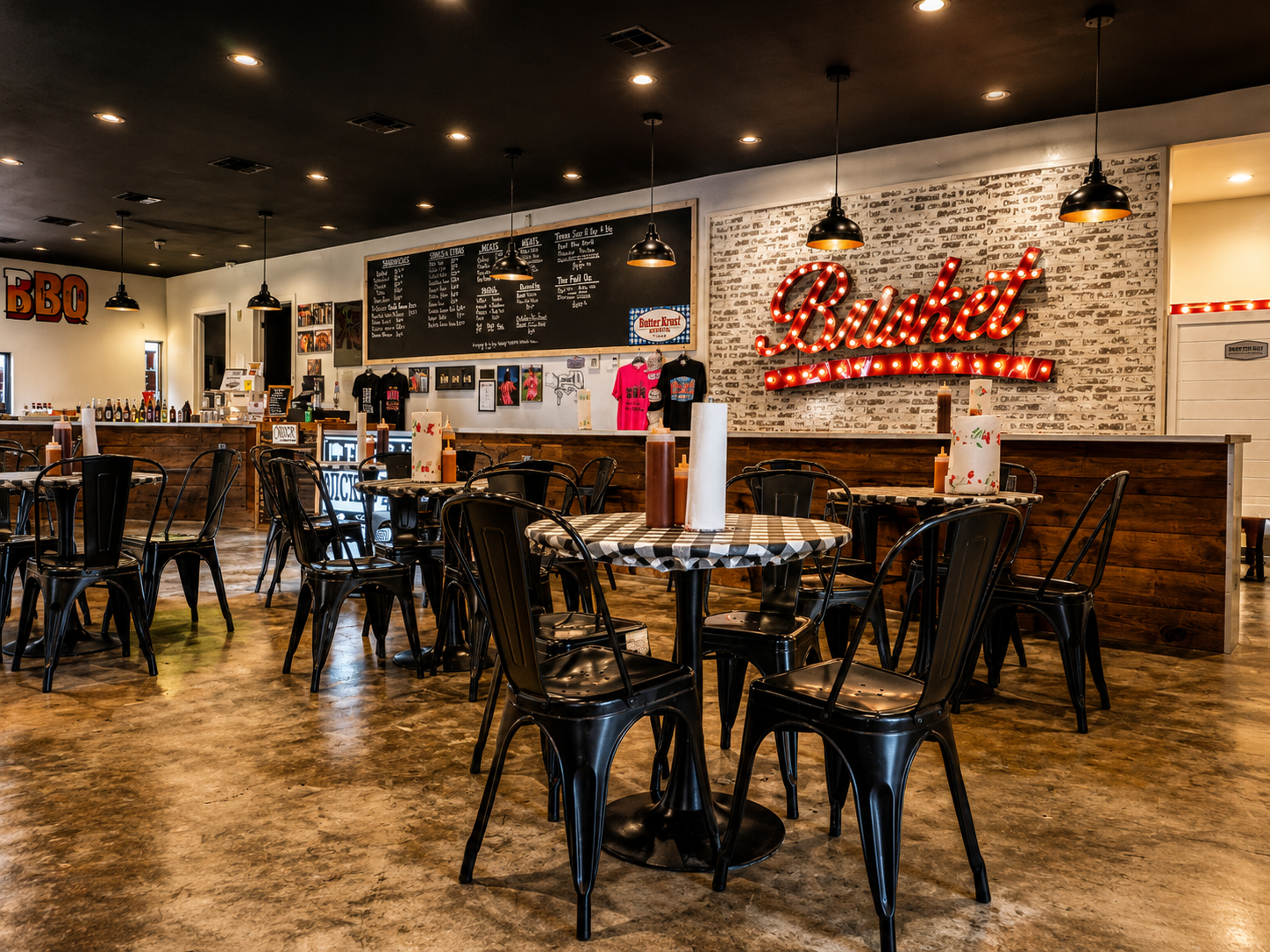
That is the trouble with the modern Magnolia Dream. You know the one. White brick. Black chairs. Edison bulbs. Neon script on the wall. A rustic Texas flag. A logo that looks like it was born in Canva and baptized by Joanna Gaines herself. It is the dream of clean country living without the blood, flies, debt, drought, labor, family trauma, and old men arguing about property lines. It is a beautiful dream in some ways. People want order. They want beauty. They want a place to take their kids after church. They want Main Street to mean something again.
There is nothing wrong with that. In fact, it is one of the healthier instincts left in America.
But the problem is that beauty without substance becomes theater. A restaurant cannot survive on décor. A town cannot revive itself on vibes. A downtown does not come back because somebody hung a sign, painted a wall, and waited for influencers to arrive in wide-brim hats and emotional support Stanley cups.
A town comes back when people decide to stop acting broke in spirit.
And that is the thing I kept feeling in Floresville. The place has potential, but potential is the cheapest drug in America. Every dying town has potential. Every empty building has potential. Every chamber of commerce meeting has potential. Potential will sit there for thirty years drinking coffee and telling everybody what it almost did.
What little towns need is will.
They need business owners who can take criticism without collapsing into martyrdom. They need customers who will support local without pretending local means immune from standards. They need city leaders who understand that a decaying downtown is not fixed by slogans. They need cops who protect the community without making every street feel like a probation office parking lot. They need Republicans who stop worshiping small business as a campaign prop and start making it easier to actually operate one. They need Democrats who stop treating regulation like moral aromatherapy and start asking whether normal working people can survive the systems they keep designing.
And more than anything, they need social capital. That old, unfashionable thing. Trust. Reciprocity. Familiar faces. Civic courage. People showing up. People spending money where they live. People telling the truth without trying to destroy each other. People who can say, “That brisket needs work,” and also say, “I hope you make it.”
That is where BBQ becomes almost biblical. Real BBQ requires patience, fire, restraint, repetition, humility, and time. You cannot fake smoke. You cannot algorithm your way into tenderness. You cannot decorate your way around a dry brisket. The meat knows. The pit knows. The customer knows too, even when he is trying to be polite because he went to high school with your cousin.
So my advice to Nickle BBQ, and really to every little South Texas business trying to live inside this Magnolia Dream, is simple. Do not just look inviting. Be inviting. Do not just build an Instagram corner. Build a reason for people to come back when their phone is dead. Give them a plate that feels generous, even if you have to simplify the menu to do it. Pull back the salt. Chase more smoke. Tell the truth about the costs without making the customer feel punished for showing up. Make the place feel less like a concept and more like a home somebody fought to keep.
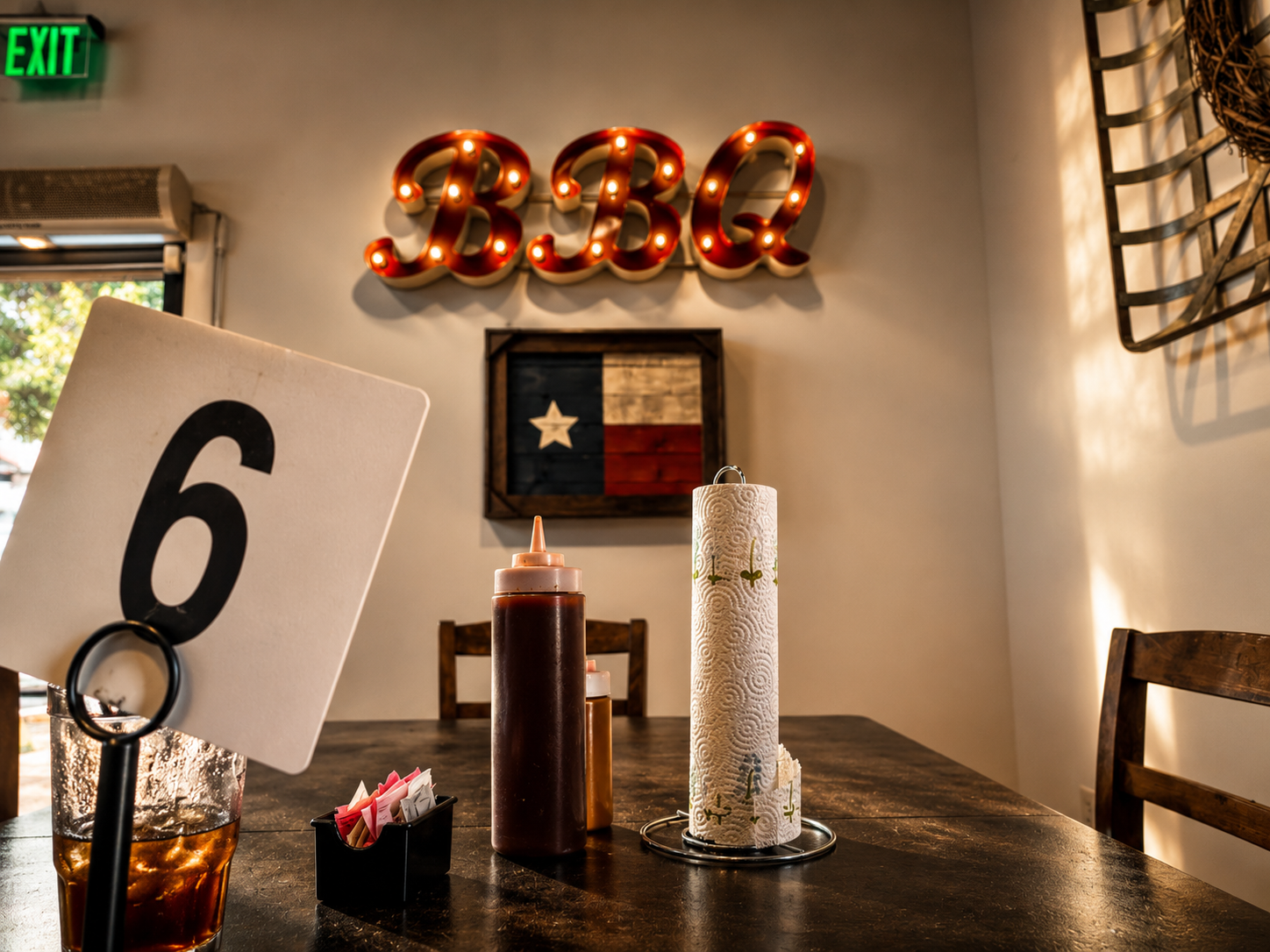
Credit: Matt Pierce
Because that is what rural Texas needs now. Not another curated dream. Not another fake revival. Not another glowing sign over a room full of economic anxiety. It needs places that produce belonging.
I will stop in again next time I am up there. I mean that. I hope they are still kicking. I hope the brisket gets better, the portions get stronger, the salt shaker gets put under armed supervision, and the town shows up for them in a way that is honest and useful.
Because Floresville does not need another building with a memory in it. It needs living rooms with cash registers. It needs tables full of people. It needs businesses that can survive without begging the algorithm for mercy.
And if the New World screwworm does not bite the herd first, maybe there is still time for small-town Texas to remember what it is supposed to be. Not a museum. Not a backdrop. Not a photo op for the Magnolia Dream.
A place. A real one. With smoke in the air, neighbors at the table, and enough courage left to tell the truth before everything beautiful gets turned into content.