

Why Karnes City, Cotulla, Freer, and Three Rivers Keep Getting the Scraps With Healthcare
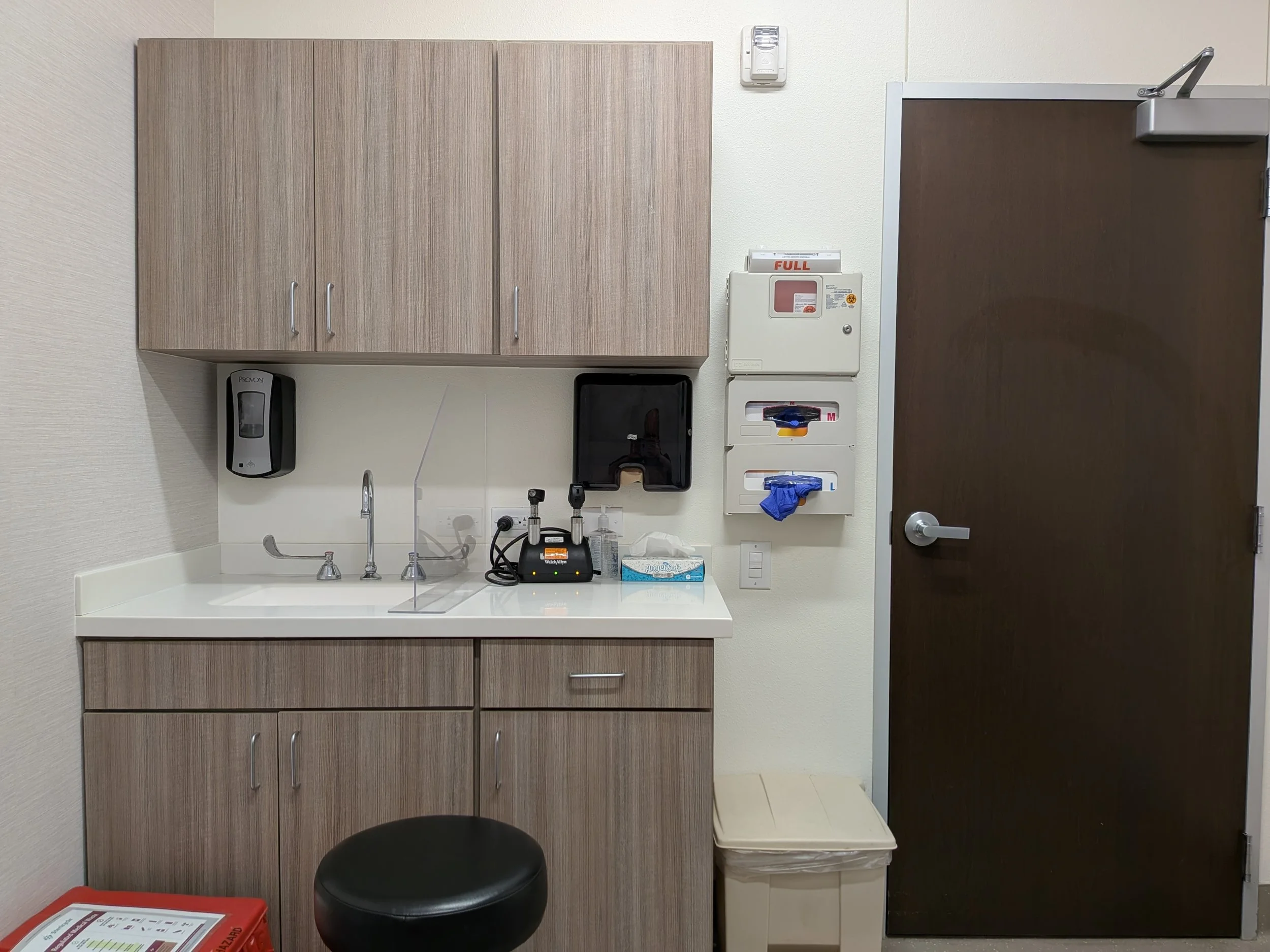
In rural Texas, healthcare access often means distance, delay, and doing more with less. (Photo Credit: Matt Pierce)
There is a certain kind of lie rural people have been asked to swallow for a long time.
It is not always spoken directly. It is usually dressed up in respectable language: access, investment, innovation, choice, transformation, equity, freedom. The words change depending on which political tribe is holding the microphone. But the reality on the ground remains stubbornly the same.
If you live in San Antonio or Austin, healthcare may not be perfect, but at least the machinery exists. There are specialists, large hospital systems, urgent care centers, imaging centers, outpatient networks, medical schools, and clinics stacked across the city like layers of institutional backup. If one door closes, another one usually exists.
But if you live in Karnes City, Cotulla, Freer, Three Rivers, or any number of small South Texas communities, healthcare often means something else entirely. It means driving. It means waiting. It means hoping the clinic is open. It means praying the nearest emergency room is enough. It means managing chronic disease with thin local resources. It means being told by people in suits that help is coming, while your neighbor still cannot get a specialist appointment without burning half a day, half a tank of gas, and the patience of Job.
And no, this is not just a rural inconvenience. It is a moral failure.
The Data Says What Rural People Already Know
A recent Texas-focused study in BMC Health Services Research looked at health differences between rural and non-rural Texas counties using 2023 County Health Rankings data. The researchers found that rural Texas counties were significantly more likely to rank in the worst quartile for length of life and clinical care. In plain English: rural Texans are more likely to live in counties where people die earlier and where access to clinical care is weaker (Ekren et al., 2025).
That is the central fact. Not the campaign slogan. Not the press release. Not the moral costume party on cable news. The fact.
The same study noted that Texas has the largest rural population of any state, with about 4.7 million people living in rural areas. It also found that 66% of Texas counties are designated rural, representing roughly 69% of the state’s landmass. So when rural healthcare fails in Texas, it is not a side issue. It is not a footnote. It is Texas itself being underserved outside the metro spotlight.
The numbers get worse. The study reported that 76 Texas counties had uninsured rates above 20%, and 60 of those counties — 79% — were rural. It also found that out of 53 counties where more than 20% of the population lives in poverty, 43 counties — 81% — were rural (Ekren et al., 2025).
That means the problem is not simply “people making bad choices,” which is the lazy explanation favored by people who do not want to think too hard. It is not merely personal responsibility, though personal responsibility always matters. It is also geography, economics, insurance, provider supply, transportation, poverty, and political neglect all braided together into one ugly rope.
Rural Healthcare Is Not Just About Hospitals
The average person hears “rural healthcare” and thinks only about hospitals. That is part of it, but it is not the whole problem.
Healthcare is a chain. Primary care, labs, imaging, specialists, mental health, dental care, emergency response, pharmacy access, transportation, broadband, insurance coverage, prevention, follow-up. Break enough links in that chain and people do not get “less convenient care.” They get worse outcomes.
Georgetown’s Health Policy Institute explains that rural residents are more likely than urban residents to experience chronic conditions, activity limitations, longer periods without insurance, and reduced access to certain types of care and screening. Rural residents also pay a larger share of healthcare costs out of pocket compared with urban residents (Georgetown University Health Policy Institute, n.d.).
That matters in places like Karnes City, Cotulla, Freer, and Three Rivers because the question is not whether people theoretically have healthcare somewhere. The question is whether healthcare is close enough, staffed enough, affordable enough, and functional enough to intervene before a manageable problem becomes a crisis.
A blood pressure problem ignored becomes a stroke. A suspicious symptom delayed becomes late-stage cancer. Untreated depression becomes addiction, suicide, family collapse, or jail. This is not abstract policy. This is flesh and blood.
What the GOP Promised Rural America
The Republican Party has long presented itself as the natural home of rural America. God, country, family, work, local control, small business, border security, oilfield jobs, ranch roads, Sunday church, and the dignity of people who do not need a sociology professor to explain their own lives to them.
Much of that rhetoric resonates because it contains truth. Rural people do not want to be managed like a federal experiment. They do not want to be talked down to by urban elites who think a county road is a lifestyle brand.
But here is the hard question: if rural America is so beloved by the right, why does rural healthcare still look like this?
Why do rural counties remain short on providers? Why are rural hospitals financially fragile? Why do rural Texans still have to travel so far for basic specialty care? Why does “freedom” so often mean being free to drive 70 miles while sick?
The Texas study specifically identifies clinical care disparities in rural counties and notes that problems include hospital closures, provider shortages, lack of Medicaid expansion, reduced social programs, and budget reductions (Ekren et al., 2025).
That is not a left-wing talking point. That is the reality sitting in the clinic waiting room.
What Democrats Still Do Not Understand
But let’s not pretend the left has clean hands.
Democrats often speak as though the rural healthcare problem can be solved by expanding programs, adding bureaucratic language, and producing another glossy equity framework. Sometimes the policy concern is valid. Insurance matters. Funding matters. Public health matters.
But the left often misses the cultural and local reality. Rural communities are not simply underserved urban neighborhoods with cows. They are different ecosystems. Trust matters. Distance matters. local identity matters. family networks matter. churches matter. transportation matters. pride matters. privacy matters. And yes, suspicion of government matters.
A rural healthcare plan that does not understand rural people is not a healthcare plan. It is paperwork with a logo.
The CDC notes that rural Americans face higher health risks because of limited access to specialized medical care and emergency services, and that rural residents tend to be older and sicker, with higher rates of smoking, high blood pressure, obesity, poverty, lower healthcare access, and lower insurance coverage (Centers for Disease Control and Prevention, 2024).
None of that gets solved by lecturing people. It gets solved by building systems that actually meet people where they are.
The Local Question: What Does This Mean for South Texas?
For South Texas towns, the issue is brutally practical.
Can an older man in Three Rivers get a cardiac specialist before the problem becomes catastrophic?
Can a working mother in Karnes City get preventive care without missing a shift she cannot afford to miss?
Can a ranch hand near Cotulla get mental health help without driving into a larger city and explaining his private life to strangers?
Can a family in Freer access urgent care, lab work, imaging, and follow-up care without turning one medical problem into a logistical campaign?
This is where big-city policymakers fail. They look at maps. Rural people live the drive.
And the drive is not neutral. The drive is cost. The drive is time. The drive is risk. The drive is missed work. The drive is delayed diagnosis. The drive is what happens when the system technically exists but is practically out of reach.
Rural Texas Strong: Real Help or Another Political Trophy?
Texas is now receiving major federal rural health funding through the Rural Health Transformation program. HHSC announced that Texas was awarded $281.3 million for the first year of the five-year program, and the state’s Rural Texas Strong plan includes six initiatives aimed at improving rural healthcare access, quality, and outcomes (Texas Health and Human Services Commission, 2026).
Good. Take the money. Build something useful.
But rural Texans should ask hard questions before anyone starts hanging banners and congratulating themselves.
Where exactly is the money going? Who gets it? How much reaches the patient? How much disappears into administration, consulting, compliance, and institutional self-preservation? Will Karnes City, Cotulla, Freer, Three Rivers, and towns like them see actual improvements? More providers? Better emergency response? Better mental health access? Better specialty referral systems? Better transportation support? Better labs and diagnostics? Better telehealth infrastructure that actually works?
Or will the program become another ceremonial offering to the gods of bureaucracy?
Rural people do not need another slogan. They need measurable outcomes.
The Real Problem Is Not Left Versus Right
The real divide is not left versus right.
It is center versus periphery.
It is the metroplex versus the county road. It is the hospital district versus the medically thin region. It is the city that gets the specialist and the town that gets the referral. It is the policymaker who says “access” and the patient who knows access means nothing if it is two counties away.
The right distracts rural voters with cultural war theater while the material infrastructure of rural life weakens.
The left talks about compassion while often failing to understand the people it claims to help.
Both sides have discovered that rural pain is politically useful. Neither side has consistently proven that rural health is morally urgent.
That is the betrayal.
What Rural Healthcare Reform Should Actually Mean
Rural healthcare reform should be judged by simple standards.
Are there more doctors, nurses, dentists, mental health professionals, and specialists serving rural areas?
Are emergency services faster and stronger?
Are rural hospitals and clinics financially stable?
Are patients getting screened earlier?
Are chronic diseases being managed before they become emergencies?
Are rural families spending less time driving for care?
Are towns like Karnes City, Cotulla, Freer, and Three Rivers gaining real healthcare capacity — or just being named in reports?
The Texas study concludes that state and local stakeholders should use local data to identify the specific disease patterns, care gaps, and service needs driving premature death in rural communities. It also argues that expanding clinical care should be a serious policy priority (Ekren et al., 2025).
That is exactly right.
Start local. Measure honestly. Fund what works. Stop pretending rural Texas can be fixed from a conference room in Austin or Washington without listening to the people who live there.
Conclusion: Stop Selling Rural People Hope Without Delivery
Rural Texans are not asking for pity.
They are asking for the basic dignity of not being forgotten once the election is over.
They are asking for healthcare systems that recognize distance, poverty, work schedules, transportation, aging populations, and provider shortages as real problems, not excuses.
They are asking the right to prove that its love for rural America is more than a campaign costume.
They are asking the left to prove that its compassion can survive contact with people who do not talk, vote, worship, work, or live like urban progressives.
And they are asking something even deeper: whether a state as wealthy, proud, and ambitious as Texas can look at its rural communities and say, honestly, that they are not being left with the scraps.
Because right now, in too many places, that is exactly what it feels like.
References:
Centers for Disease Control and Prevention. (2024, May 16). About rural health. https://www.cdc.gov/rural-health/php/about/index.html
Ekren, E., Maleki, S., Curran, C., Watkins, C., & Villagran, M. M. (2025). Health differences between rural and non-rural Texas counties based on 2023 County Health Rankings. BMC Health Services Research, 25, Article 2. https://doi.org/10.1186/s12913-024-12109-2
Georgetown University Health Policy Institute. (n.d.). Rural and urban health. https://hpi.georgetown.edu/rural/
Texas Health and Human Services Commission. (2026, February 4). HHSC submits Rural Texas Strong revised budget. https://content.govdelivery.com/accounts/TXHHSC/bulletins/407ca59
Texas Health and Human Services Commission. (2026). Budget Period 1 revised project narrative: Rural Health Transformation Program. https://pfd.hhs.texas.gov/sites/default/files/documents/rural-hlth-prgm/bdgt-prd-1-rvsd-prjt-narr.pdf