

The Alamo Cannonball Discovery Proves San Antonio History Is Still Alive
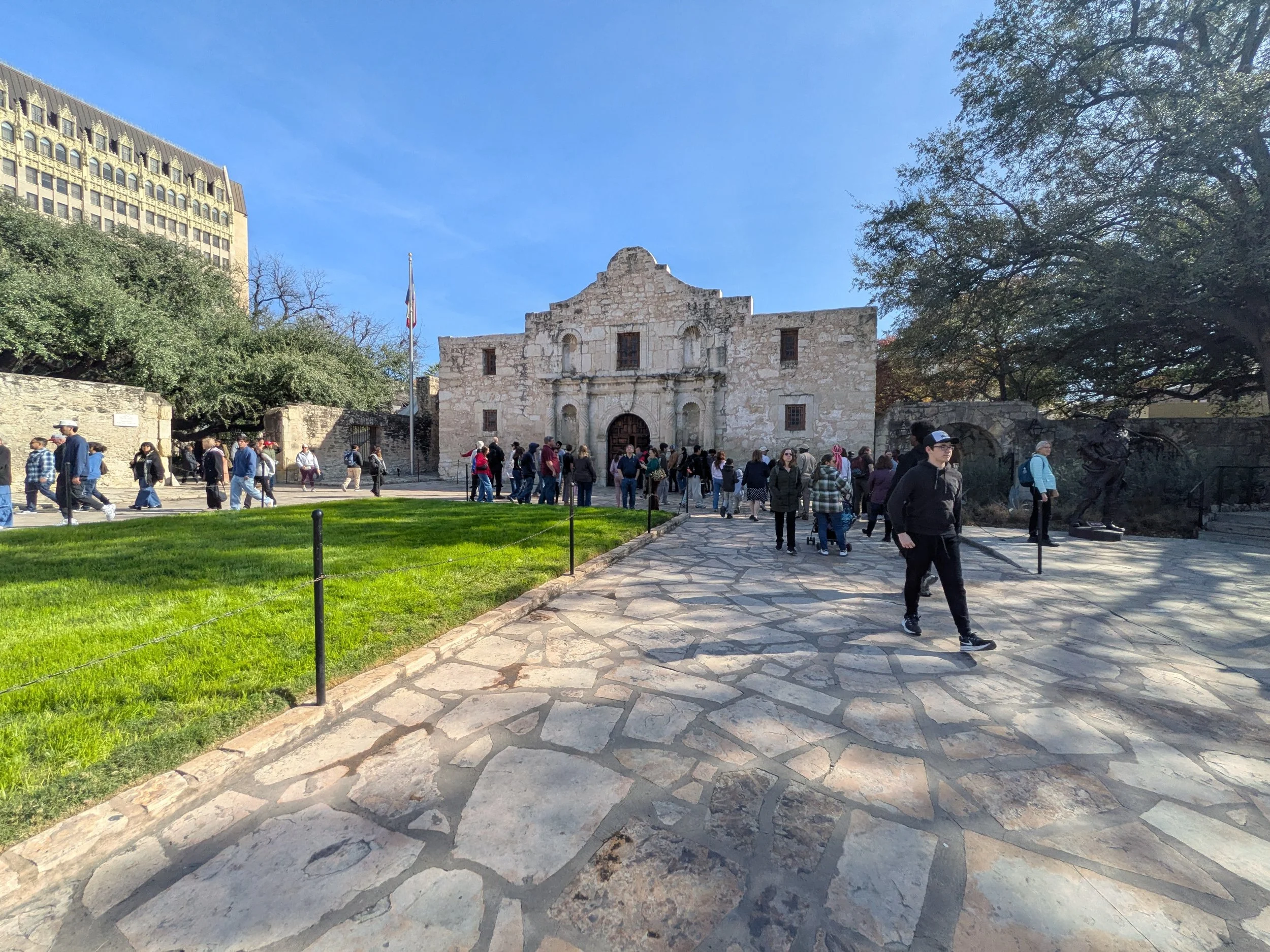
There are some things that will flat stop a South Texan in his tracks.
A rattlesnake under a feed sack.
A low-water crossing running brown and mean.
A strange light moving across a Hill Country ridge after midnight.
And now, apparently, a four-pound bronze cannonball crawling out of the dirt outside the Alamo Church like it had finally gotten tired of waiting on us to pay attention.
Good Lord.
This is the kind of Texas story I live for.
Not because it is clean. Not because it is easy. Not because it fits nicely into some polished museum sentence with a brass plaque and a soft little spotlight. No. I like it because it is dirty. Literally dirty. Three feet underground. Buried in the old blood-and-limestone memory of San Antonio, waiting down there while tourists bought snow cones, walked the San Antonio River Walk, posed for pictures, and hurried past the place where history was still breathing under their boots.
That is what gets me.
We talk about the history of San Antonio like it is finished. Like it was wrapped up a long time ago, sealed behind glass, turned into a slogan, and handed over to schoolchildren and tour buses. But then the ground opens its old mouth and says, “Not so fast, amigo.”
A cannonball.
Not a rumor. Not a legend. Not one more exaggerated campfire story from a hunting lease where every shadow becomes a ghost and every cedar brake is full of Mexican soldiers, Comanches, lost treasure, and somebody’s uncle who swears he saw a woman in white near the creek.
This was metal. Bronze. Weight. War. Evidence.
And I have to tell you, I am enjoying this new era of discovery more than I expected to.
Because for a long time, too much of Texas history got treated like a dead animal on the side of the road. Everybody slowed down to look at it, but nobody wanted to get out of the truck and study the tracks. We repeated the big stories. We fought over the same names. We turned real human events into bumper stickers. And somewhere along the way, the dirt itself got ignored.
But now the dirt is talking again.
And if you are from South Texas, you know the dirt has always had a long memory.
It remembers wagon roads. It remembers mission bells. It remembers ranch gates, deer blinds, dry tanks, flood lines, fence posts, old bones, old coins, old bottles, old sins, and the sound of men doing desperate things in desperate times. The dirt remembers the things families stop talking about. The dirt remembers the things cities pave over.
That is why this Alamo cannonball matters.
It is not just about the Alamo. It is about San Antonio history becoming alive again in public view. It is about the old city refusing to become a postcard. It is about people standing around in the middle of downtown San Antonio, near one of the most famous places in Texas, realizing that the past is not gone.
It is below us.
That ought to rattle your cage a little.
Because this discovery did not happen out in some forgotten ravine thirty miles from a paved road. It happened at the Alamo, in the center of San Antonio, where the modern city presses in from every side. Hotels, restaurants, traffic, music, convention badges, margarita glasses, River Walk boat tours, police sirens, school groups, and the whole strange carnival of modern Texas life.
And under all that noise, there it was.
A battle-era cannonball.
That is the part I cannot shake.
We are living in a time when people are desperate for something real. Everybody is drowning in screens and fake outrage and plastic culture. Half the country is arguing with strangers on the internet before breakfast. The other half is filming itself arguing with strangers on the internet. But then some archaeologist with a trowel and a steady hand pulls a cannonball out of the ground, and suddenly the whole machine goes quiet for one clean second.
Because that object does not care about our opinions.
It was there.
It has been there.
It is a witness.
That is why this matters now.
We need witnesses.
We need old things that force us to slow down. We need artifacts that make us remember that Texas was not built by abstractions. It was built by people. Scared people. Brave people. Foolish people. Ambitious people. Homesick people. Violent people. Faithful people. Men and women caught in storms bigger than themselves.
That is the real Texas story.
Not the cartoon version. Not the cheap version. Not the version sold on a shot glass. The real one.
And the real one is always more complicated, more human, and more interesting.
This is where my enjoyment comes from. I like watching this new age of archaeology and preservation because it is forcing San Antonio to deal with itself. Not just as a tourist destination. Not just as the home of the Alamo. Not just as a place where people come for the River Walk and a plate of enchiladas before heading back to the airport.
San Antonio is one of the great story cities in America.
It has layers like an old ranch family. Spanish mission. Indigenous ground. Mexican town. Military crossroads. German merchants. Chili queens. Cattle money. Political machines. Neighborhood saints. Ghosts in the walls. Floods in the streets. Soldiers, priests, gamblers, builders, widows, Tejanos, Anglos, and every kind of survivor the country can produce.
And now, piece by piece, the city is being rediscovered.
That is powerful.
For this channel, this is exactly the kind of thing that ties everything together: history of San Antonio, Texas stories, ranch life, Hill Country Texas, and even those Texas scary stories that people tell when the fire burns low and the wind starts working through the mesquite.
Because what is scarier than realizing the past is still right there?
Not movie scary. Not cheap haunted-house scary. I mean the old kind of scary. The kind that comes when you are walking across a place and suddenly understand that men once fired artillery there. Men bled there. Men prayed there. Men heard the walls crack and the cannon smoke roll and knew they might not see another sunrise.
That kind of history does not whisper.
It waits.
Then one day it comes up in a shovel full of San Antonio dirt.
And all at once, the Alamo is not just a shrine. It is not just a symbol. It is a crime scene, a battlefield, a mission, a cemetery of memory, a political argument, a family inheritance, and a living archaeological site in the middle of a city still trying to decide what it wants to remember.
That is why I am fired up about this.
This new era of discovery gives us permission to tell better stories.
Not louder stories. Better ones.
Stories with dirt under the fingernails. Stories that admit uncertainty. Stories that say, “We think this cannonball was likely Mexican Army bronze, but history is a tricky old varmint and you better not pretend you know everything.” That kind of humility matters. It makes the story stronger, not weaker.
Because the real authority is not in pretending.
The real authority is in looking carefully.
That is what ranch life teaches you, too. You learn to read sign. A broken stem. A track in the mud. A fence leaning wrong. Buzzards circling low. A change in the wind. Out in South Texas, the land is always telling you something, but it does not shout. You have to know how to listen.
Archaeology is the same thing.
It is reading sign.
Only instead of deer tracks and hog wallows, you are reading soil layers, metal fragments, old foundations, and the hard evidence of human consequence.
That is why this Alamo discovery feels bigger than one cannonball.
It feels like a signal flare.
It says we are entering a time when the history of San Antonio can be told with fresh evidence, fresh eyes, and a little less laziness. It says the old stories are not exhausted. It says Texas history still has teeth.
And I love that.
I love it because South Texas deserves more than clichés. San Antonio deserves more than a postcard. The Alamo deserves more than people yelling at each other from opposite sides of a myth. The River Walk deserves to be understood as part of a deeper city, not just a pretty bend of water with dinner reservations.
And the people watching this channel deserve stories that make them feel the ground under them.
That is the whole point.
When a cannonball comes out of the dirt in old San Antonio, it is not just an artifact. It is a reminder that we are standing on unfinished history.
So the next time you walk past the Alamo, or drift along the San Antonio River Walk, or drive north into Hill Country Texas, or head south toward a ranch gate and a deer lease where the brush gets thick and the cell signal dies, remember this:
The land is not empty.
It is loaded.
Loaded with memory. Loaded with stories. Loaded with old violence and old beauty and old warnings. Loaded with things we have not found yet.
And somewhere under our feet, South Texas is still holding its breath.
Waiting for somebody to dig.